

Table of Contents
- Quick Comparison: 8 Cheap Foam Sheets for School Projects
- How to Pick Foam Sheets for School Projects
- 1. Polyethylene Flat Foam Roll: Best All-Purpose Sheet
- 2. Master Roll Foam Sheet: Best for Whole-Classroom Supply
- 3. Curlz Craft Foam Spirals: Best Pre-Cut Shapes
- 4. 8 Pack Craft Foam Sticks: Best for Group Projects
- 5. 6 Pack Foam Sticks (Gray): Best Budget Pack
- 6. Noodle Rope Craft Foam: Best for Dioramas and Models
- How to Cut and Shape Foam Sheets Safely
- How to Glue Foam Sheets Together
- Safety Tips for Working with Foam
- Budget-Friendly Bulk Sourcing
- Foam Recycling and Disposal
- Frequently Asked Questions
Last Updated: September 13, 2026
Quick Comparison: 8 Cheap Foam Sheets for School Projects
Finding cheap foam sheets for school projects means matching thickness and density to the job, not chasing the lowest price. FoamNoodles stocks craft foam in flat rolls, pre-cut spirals, and solid sticks, so one material covers dioramas, costumes, and classroom models. Below, we compare eight options by thickness, density, and best use.
A common mistake is grabbing the thinnest sheet because it costs least, then watching it buckle under glue and paint. Density matters more than price for anything load-bearing.
Quick Picks:
- Best All-Purpose: Polyethylene Flat Foam Roll: cuts clean, holds shape, works for padding and props
- Best for a Whole Classroom: Master Roll Foam Sheet: 200 feet of material for repeated lessons
- Best Pre-Cut Shapes: Curlz Craft Foam Spirals: ready to wrap, no cutting required
- Best Budget Pack: 6 Pack Foam Sticks (Gray): lowest entry price for small groups
| Product | Thickness | Best For | Price |
|---|---|---|---|
| Polyethylene Flat Foam Roll | 1/2" | All-purpose sheets | $149.99 |
| Master Roll Foam Sheet | 1/2" | Whole-classroom supply | $879.99 |
| Curlz Craft Foam Spirals | 48" spirals | Pre-cut shapes | $28.99 |
| 8 Pack Craft Foam Sticks | 2" diameter | Group projects | $27.99 |
| 6 Pack Foam Sticks (Gray) | 1.5" diameter | Budget pack | $19.99 |
| Noodle Rope Craft Foam | 5/8" | Dioramas and models | $16.99 |
How to Pick Foam Sheets for School Projects
Start with the project type, then work backward to thickness. A diorama base needs a sheet stiff enough to stay flat under paint and glue; a costume piece needs something flexible that bends without cracking.

Thickness and Density by Project Type
Thickness controls stiffness; density controls how foam behaves under pressure. Most craft foam falls into three bands:

- Under 1/4 inch: Best for flat decorations, paper-like cutouts, and layering. Too flimsy for anything standing upright.
- 1/4 to 1/2 inch: The workhorse range. Handles diorama bases, model terrain, and simple props.
- Over 1/2 inch: For structure. Backer rods and thick tubes hold shape for arches, columns, and three-dimensional builds.
Density is the part most guides skip. Denser foam resists crushing, which matters for anything handled repeatedly. Lighter foam cuts faster but dents easily.
1. Polyethylene Flat Foam Roll: Best All-Purpose Sheet
This is the roll to buy if you want one material that handles almost anything a classroom throws at it. The polyethylene construction resists tearing and doesn't crumble at the edges when cut.
At roughly 50 feet by 36 inches by 1/2 inch thick, a single roll covers a full semester of projects (uline.com). It cuts cleanly with a razor knife, holds paint and glue well, and stands up to repeated handling.
The one drawback: you need a sharp blade and a cutting mat for clean edges. Scissors work in a pinch but leave ragged lines on thicker sections.
2. Master Roll Foam Sheet: Best for Whole-Classroom Supply
Buy this when a single class project will consume everything in sight. The Master Roll runs approximately 1/2 inch by 49 inches by 200 feet, enough that you stop thinking about running out mid-lesson.

It's the same polyethylene as the flat roll, just larger. That consistency matters: every student gets identical material, so results are comparable across the room. The roll weighs about 58 pounds, so plan where it lives before it arrives.
The honest limitation is the upfront cost. For one student's project, this is far more material than you need.
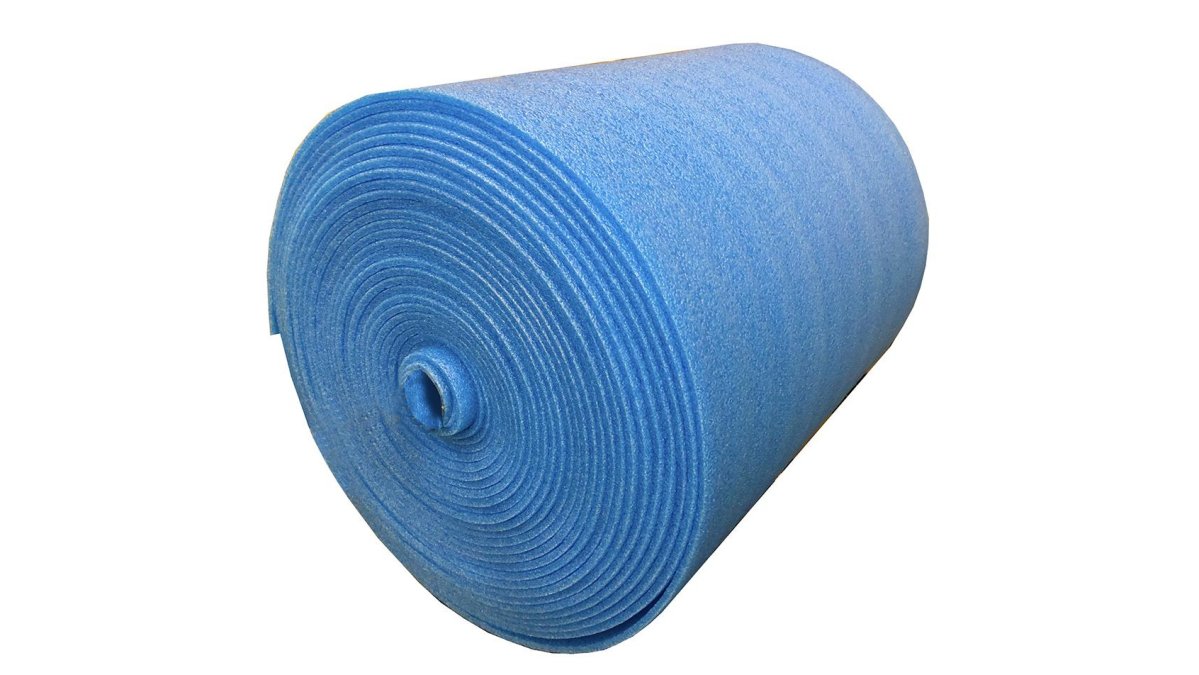
3. Curlz Craft Foam Spirals: Best Pre-Cut Shapes
Pre-cut spirals save the step that eats the most class time: measuring and cutting. Each 48-inch spiral comes ready to wrap, bend, or coil, useful for costume design, wreath bases, and decorative structures.
The four-pack includes red, blue, yellow, and green, so you get color variety without buying separate packs. Students can wrap them with ribbon, fabric, or paint, and the spiral holds its form instead of sagging.
Where it falls short: you can't reshape a pre-cut spiral into a flat sheet. If your project needs broad surfaces rather than curves, look at the flat rolls.
4. 8 Pack Craft Foam Sticks: Best for Group Projects
Eight sticks at 2 inches by 35 inches give a group enough material to work simultaneously without a queue at the cutting table. That's over 23 feet of combined length per pack, covering most classroom builds.
The solid-core cylinders work for structural elements: columns, tree trunks, puppet arms, and anything that needs to stand upright. They come in yellow, blue, green, gray, or red, so you can color-code by group.
5. 6 Pack Foam Sticks (Gray): Best Budget Pack
This is the lowest-cost way to get started, and for small groups it's often the right call. Six sticks at 1.5 inches by 35 inches give you over 17 feet of material, enough for one project or a pair of students.
The narrower 1.5-inch diameter suits finer work than the larger sticks: model limbs, thin supports, and detail pieces where a 2-inch cylinder would look clumsy. Gray is neutral, useful as a base layer you'll paint over.
The trade-off is color choice. Gray only, so if you need bright colors for a display, budget for paint or step up to the larger multi-color pack.
6. Noodle Rope Craft Foam: Best for Dioramas and Models
Noodle rope is the sleeper pick on this list. At 20 feet long and 5/8 inch thick, it's thin enough to bend into tight curves but solid enough to hold a shape, ideal for model terrain, fence lines, and organic forms.
It cuts, twists, and glues without fuss, and takes paint well. Because it's waterproof polyethylene, it won't degrade if a project involves moisture, and the solid core won't collapse when you bend it.
For a scene-building project, a single roll handles a surprising amount of detail work. Pair it with a flat sheet for the base and you have a complete diorama kit.
How to Cut and Shape Foam Sheets Safely
Foam cuts differently depending on density and cell structure, so the same blade that glides through a thin craft sheet will drag and tear through a thick roll. Match the tool to the material and the student's age, and clean edges follow.
Match the Tool to the Foam
- Under 1/4 inch, low density: Safety scissors or a rotary cutter handle these cleanly. A rotary cutter on a self-healing mat gives the straightest edge, but it is a teacher-only tool.
- 1/4 to 1/2 inch, medium density: A sharp craft knife with a fresh blade, guided by a metal straightedge. Score the first pass, then cut through on the second. Trying to cut through in one motion compresses the foam and bows the edge.
- Over 1/2 inch, high density: A hot wire cutter or an electric carving knife produces the smoothest face, because it slices rather than pushes. A craft knife works but requires three or more passes and leaves a rougher wall.
- Cylinders and rope: A single rocking cut with a sharp craft knife, rolling the cylinder as you go, keeps the end square. Sawing back and forth crushes the core and leaves a mushroomed tip.
Why Density Changes the Cut
Closed-cell foam traps gas in tiny sealed pockets, so a sharp blade slices between cells and leaves a smooth wall (PubMed).
Density also determines how much the foam springs back. A denser sheet holds the kerf (the gap the blade leaves) open, so your cut line stays where you put it. A lighter sheet closes behind the blade, pinching the knife and letting the blade wander.
Age-Tiered Safety
- Grades K-2: Pre-cut all thick sections. Students handle assembly, gluing, and decorating only. Give them safety scissors and blunt-tip tools.
- Grades 3-5: Safety scissors and low-temperature glue guns under supervision. No craft knives.
- Grades 6-8: Craft knives with a cutting mat, a metal straightedge, and a demonstrated cut-away-from-your-body technique. Count blades in and out.
- Grades 9-12: Hot wire cutters and electric carving knives with ventilation and teacher sign-off.
Setup That Prevents Most Accidents
- Measure and mark with a pencil, not a pen. Ink smears on foam and bleeds through paint.
- Tape the sheet down at the corners so it cannot slide mid-cut.
- Cut away from your body and keep the steadying hand behind the blade, never in front of it.
- Change the blade the moment it drags. A dull blade is the single biggest cause of torn edges and slipped cuts.
- Sand edges with fine-grit paper wrapped around a block for a smooth, paint-ready face.
For curves, draw the full outline first, then cut in short overlapping strokes rather than trying to follow the whole arc in one motion. Rushing a curve is how students end up with jagged edges and wasted material.
How to Glue Foam Sheets Together
The adhesive matters as much as the technique, and the wrong one destroys the surface before the bond forms. This is the part parents and teachers ask about most: which glues are safe for kids, and which ones melt the foam.
Why Some Glues Melt Foam
Solvent-based adhesives dissolve the foam's cell walls on contact, leaving a pitted, cratered surface (PubMed). This is most common with polystyrene foam, which is why superglue or solvent-heavy contact cement can eat straight through a sheet. Polyethylene and EVA foams resist most solvents better, but test on a scrap first.
Non-Toxic Adhesive Compatibility Guide
| Adhesive | Safe for Kids | Works On | Watch Out For |
|---|---|---|---|
| White school glue | Yes | Paper-to-foam, light foam-to-foam | Slow set, weak on thick joints |
| Foam-safe craft glue | Yes | Most craft foams | Longer clamp time than hot glue |
| Low-temperature hot glue | Yes, with supervision | Fast joints, structural pieces | Burns if tip touches skin |
| Glue sticks | Yes | Flat paper-to-foam layering | Not for load-bearing joints |
| Solvent-based contact cement | No | Industrial bonds only | Melts polystyrene, strong fumes |
| Standard superglue | No | Rigid non-foam surfaces | Eats certain foams, skin-bonding risk |
The Scrap Test
Before gluing a finished project, apply a small bead of your chosen adhesive to an offcut of the same foam and wait the full cure time on the label. If the surface pits, wrinkles, or dissolves, the adhesive is incompatible. If it holds, you're clear to proceed. This two-minute test prevents the most common foam-craft failure.
Getting a Strong Bond
Apply a thin layer to both surfaces rather than a thick bead to one. Thin layers cure faster and leave no gap that shows through paint. Press the pieces together and hold for the time the label specifies, or clamp edges with a clothespin. For large flat joints, weight the piece with a book and let it cure undisturbed.
For joints that need to set in seconds, low-temperature hot glue is the practical choice. For anything a student will handle repeatedly, foam-safe craft glue gives a more flexible, longer-lasting bond.
Safety Tips for Working with Foam
Foam is one of the safer craft materials, but a few habits prevent the most common problems. Cut away from your body, keep fingers behind the blade, and never cut toward a hand holding the material.
Ventilate the room when using spray adhesives or heat tools; fumes build up faster than people expect in a closed classroom. For younger students, pre-cut the thicker sections and let them handle assembly, removing the knife risk entirely.
Store sheets flat, not rolled or folded. Foam takes a set over time, and a sheet folded in a supply closet for a month won't lie flat on a project board.
Budget-Friendly Bulk Sourcing
Buying in bulk lowers your per-project cost, but only if you'll use the material before it degrades. For a single classroom, a large roll spread across a school year typically costs less per project than repeated small purchases.
For schools and clubs running multiple projects, coordinating a single bulk order across classrooms spreads the cost further and keeps everyone working with the same material. FoamNoodles offers bulk purchasing options and free shipping, which matters when you're ordering enough material to supply a whole grade level. Standardizing these crafting supplies for projects ensures consistency across diverse classroom activities, much like the uniform quality required when sourcing bulk silicone beads for crafts.
The practical rule: estimate your total material need for the term, then buy once at that volume rather than restocking every few weeks.
Foam Recycling and Disposal
Most craft foam isn't accepted in curbside recycling, so plan for disposal before the material piles up. Check whether your local facility accepts polyethylene foam specifically, since rules vary by municipality.
Clean, unpainted offcuts can often be donated to art programs or reused for smaller projects rather than thrown out. Keep a scrap bin for pieces larger than a few inches and you'll find they cover a surprising number of small jobs.
For anything painted or glued, reuse is usually the better path than disposal. Cut around glued sections and save the clean foam.
Frequently Asked Questions
How do you cut foam sheets for school projects without tearing?
Use a sharp blade and let the tool do the work. A precision knife gives the cleanest edges on thicker foam, while standard scissors work for sheets under 2mm. For circles and curves, cut a paper template first and trace it onto the foam, then cut just outside the line. A heat gun passed lightly over the edge smooths any roughness. Always cut on a self-healing mat or scrap cardboard to protect your table.
What are the best adhesives to use on foam sheets?
Low-temperature hot glue and foam-safe craft glue work well for most school projects. For a permanent bond on polyethylene foam, use a contact adhesive designed for foam. Avoid standard superglue because it can melt or stiffen some foams. If students are gluing, a glue stick or white school glue is the safest choice. Test any new adhesive on a scrap piece first to confirm it does not dissolve the foam.
Are there different thicknesses of craft foam available for school projects?
Yes. Thin sheets around 2mm suit paper-style crafts, cards, and collage. Medium sheets around 6mm hold shape for dioramas, masks, and model bases. Thick sheets at 12mm or more work for structural builds like presentation board frames or props. Match thickness to the project: thin for flat art, medium for standing shapes, thick for anything that needs to support weight or hold a curve.
Where is the best place to find affordable craft foam for students?
Buying in bulk directly from a foam supplier usually beats single-sheet prices at big-box stores. FoamNoodles offers value packs starting at $14.99, and bulk rolls bring the per-sheet cost down further for classrooms. Check the total square footage and sheet count before comparing, since pack sizes vary widely. Ordering one large roll and cutting it yourself is often the cheapest route for a full semester of projects.
What can I use instead of foam sheet for a school project?
Corrugated cardboard, felt, and craft felt board are common substitutes, but each behaves differently. Cardboard is stiffer and harder to curve. Felt is softer but does not hold a rigid shape. Foam remains the top pick for dioramas and models because it is lightweight, easy to cut, and holds paint and glue well. If foam is unavailable, layered cardstock works for flat projects but not for anything three-dimensional.
Picking foam for a classroom or a single project comes down to matching thickness and density to the job, then buying enough to avoid a mid-project restock. FoamNoodles carries flat foam rolls, pre-cut spirals, craft sticks, and noodle rope so you can source everything for a term in one order, with bulk pricing and free shipping on qualifying orders. Browse the full range and get your next project started with material that holds up.