

Table of Contents
- What Is a Polyethylene Foam Roll
- Key Applications for Polyethylene Foam Rolls
- Foam Roll Thickness Guide: Choosing the Right Dimensions
- Material Properties That Make Polyethylene Foam Effective
- How to Store Foam Rolls for Long-Term Use
- Protective Packaging Materials: When to Use Foam Rolls
- Cutting and Customizing Your Foam Roll
- Frequently Asked Questions
Last Updated: September 30, 2026
What Is a Polyethylene Foam Roll
A polyethylene foam roll is a lightweight, flexible cushioning material made from chemically cross-linked polyethylene that comes in continuous rolls for easy dispensing and cutting. This type of foam serves as protective padding, void fill, and structural support across dozens of applications, from shipping fragile items to insulating pipes and creating custom padding for DIY projects.

Polyethylene foam resists mildew, mold, rot, and bacteria, maintaining integrity in damp environments where durability matters.
Polyethylene foam is versatile and easy to use, cut with a razor knife, shape to fit custom spaces, and apply immediately without special tools. It's shatter-proof, lightweight, and strong enough to absorb impact and vibration across diverse applications.
FoamNoodles offers polyethylene foam rolls, easy to store and durable for years.
Key Applications for Polyethylene Foam Rolls
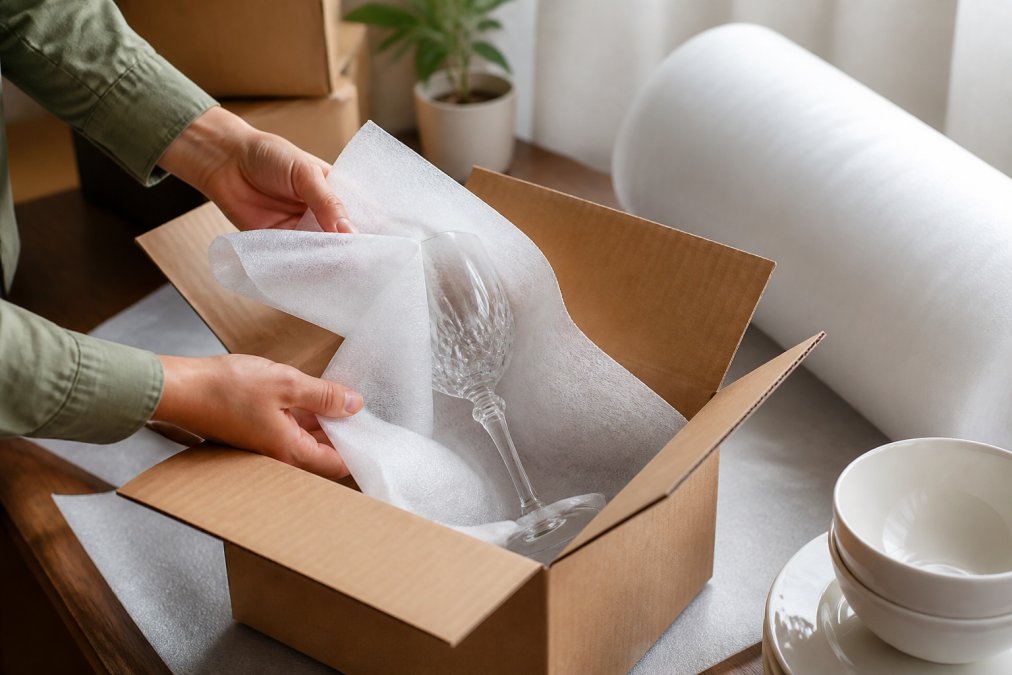
Protective Packaging and Shipping: Polyethylene foam wraps fragile items, absorbs shocks during transit, and prevents damage. The non-abrasive surface won't scratch high-value goods, making it ideal for e-commerce shipping.
Pipe Insulation and Construction: Contractors use polyethylene foam as backer rods, thermal barriers around pipes, and protective wrapping. Its flexibility conforms to curved surfaces while resisting moisture and temperature fluctuations.
Pool and Water Recreation: Polyethylene foam's buoyancy and flotation properties make it ideal for kayak stabilizers and pool equipment.
Craft and DIY Projects: Hobbyists use polyethylene foam rolls for custom toolbox inserts, protective cases, floor mats, and pet beds. Easy cutting and shaping require no special skills.
Industrial Padding and Vibration Damping: Manufacturing facilities use polyethylene foam to cushion machinery and protect sensitive components during assembly and storage.
Foam Roll Thickness Guide: Choosing the Right Dimensions
Match your foam thickness to the fragility of your item and the impact forces it will face during handling and transit.
1/4-inch foam: Light-duty protection for low-impact scenarios
Use for items that won't experience significant drops: books, vinyl records, framed artwork, furniture surfaces, and craft projects. Minimal bulk makes it practical when space is limited.
1/2-inch foam: The versatile standard for most shipping and protective applications
This thickness balances protection, cost, and practicality. Use for fragile items like glassware and electronics, moderate handling, protective inserts, and construction applications. FoamNoodles' Polyethylene Flat Foam Roll comes in 50 feet long, 36 inches wide, and 1/2 inch thick.
1-inch foam: Maximum cushioning for high-impact or high-value scenarios
Choose for extremely fragile or valuable items, anti-fatigue mats, and rough handling scenarios. The additional thickness absorbs harder impacts but increases material cost and bulk.
Roll width and length: Matching dimensions to your project scope
The Master Roll Foam Sheet from FoamNoodles offers 200 feet at 1/2-inch thickness and 49 inches wide, while the Polyethylene Flat Foam Roll is 50ft x 36” x 1/2".

Material Properties That Make Polyethylene Foam Effective
Understanding why polyethylene foam performs so well helps you use it correctly and maximize its benefits.
Closed-cell structure is the foundation of polyethylene foam's durability. Unlike open-cell foam where air pockets connect to each other, closed-cell foam has individual sealed pockets. This structure makes the material impervious to mildew, mold, rot, and bacterial growth, properties that matter enormously in damp environments or long-term storage. The closed-cell design also gives polyethylene foam superior chemical and grease resistance.
Shock absorption and vibration damping come from the foam's ability to compress and then return to its original shape. When impact force hits the material, the air pockets compress gradually, dissipating energy rather than transferring it to the item inside. This is why polyethylene foam rolls protect fragile items during shipping, the foam absorbs the shock of drops and bumps before that force reaches your product.
Lightweight construction makes polyethylene foam practical for large projects. A 200-foot roll of 1/2-inch foam weighs around 58 pounds, which is manageable for one person to handle and position. This low weight means you can cover large areas without structural reinforcement or special equipment.
Flexibility and easy fabrication allow you to cut, shape, and adapt polyethylene foam to custom dimensions. A simple razor knife cuts through the material cleanly. You can create custom inserts for cases, wrap irregular shapes, and fabricate padding for specific needs without special tools or training.
Tear resistance and durability mean polyethylene foam doesn't shred, fray, or deteriorate quickly. The material maintains its integrity through repeated use, temperature fluctuations, and exposure to sunlight. This longevity makes it cost-effective over time, you're not replacing worn-out padding every season.
How to Store Foam Rolls for Long-Term Use
Proper storage preserves the performance of your polyethylene foam roll and extends its usable life. Foam stored carelessly can become compressed, creased, or damaged in ways that reduce its protective capability.
Store rolls vertically or flat in a cool, dry location. Avoid stacking heavy items on top of foam rolls, as sustained compression can create permanent creases. If you must stack rolls, place them on a shelf or pallet where weight is distributed evenly, and rotate them periodically to prevent compression marks.
Keep foam away from direct sunlight and extreme heat. Store rolls in a shaded area, ideally indoors. Extreme heat can soften the material temporarily, though it returns to normal when cooled.
Maintain moderate humidity levels. Although polyethylene foam resists moisture, storing it in very humid environments can encourage mold growth on the surface. A dry storage area with ventilation prevents this issue.
Use the foam within a reasonable timeframe. Polyethylene foam doesn't have a strict expiration date, but material stored for many years may experience slight compression or surface changes. For best results, use foam within 2-3 years of purchase.
Keep rolls in their original packaging when possible. The packaging protects the foam from dust, damage, and accidental compression during storage.
Protective Packaging Materials: When to Use Foam Rolls
Choosing between polyethylene foam rolls and other protective packaging materials requires understanding what each option does well and where it falls short.
Polyethylene foam rolls excel when you need reusable, durable cushioning that resists mildew, mold, rot, and bacteria. Use them for items that will be stored or shipped repeatedly, or when you need protection that lasts for years. The non-abrasive surface makes polyethylene foam the right choice for protecting finished surfaces, furniture, artwork, or items with delicate coatings.
For shipping fragile items, protective packaging materials work best in layers. Wrap the item in polyethylene foam, place it in a box with additional cushioning material around it, and you've created a system that absorbs impacts from multiple directions.
Cutting and Customizing Your Foam Roll
The ability to cut polyethylene foam to exact dimensions is one of its greatest advantages. Unlike pre-sized foam sheets, a foam roll lets you create custom pieces for your specific project. Beyond basic cutting, understanding how to wrap different shapes ensures maximum protection and material efficiency.
Basic cutting technique and tools
Use a sharp utility knife or razor blade with a fresh blade, dull blades tear rather than cut cleanly. Mark your cut line with a marker or pencil, then draw the knife through the foam in one smooth motion. The closed-cell structure cuts cleanly without crumbling or fraying. For straight cuts, use a metal ruler or straightedge as a guide to ensure accuracy. For curved cuts (around pipes or cylindrical objects), mark the line and cut slowly, allowing the blade to follow the curve naturally.
Wrapping flat items: Books, artwork, and framed pieces
For flat objects, cut foam strips slightly longer than the item's longest dimension. Wrap the foam around the item in a spiral pattern, overlapping each layer by 2-3 inches. This overlap prevents gaps where impact could reach the item. For valuable artwork or framed pieces, use 1/2-inch or 1-inch foam and wrap at least twice around the perimeter. Secure the foam with tape or stretch wrap to keep it in place during shipping.
Wrapping irregular shapes: Electronics, sculptures, and oddly-sized items
Irregular objects require a different approach. Cut multiple foam pieces and layer them around the item, building up protection gradually. Start with a base layer that covers the most vulnerable areas (corners, protruding elements, delicate surfaces). Add a second layer perpendicular to the first, creating a cross-hatch pattern that distributes impact force. For items with sharp corners or protrusions, cut notches in the foam so it fits snugly without gaps. Test the fit before sealing, the foam should be snug enough that the item doesn't shift inside the wrapping.
Creating protective inserts and custom padding
Measure the space you need to fill (toolbox, equipment case, storage container), then cut foam to those exact dimensions.
Layering for increased protection
Perforated cutting for flexible yet structured padding
Some applications benefit from perforated foam, which allows flexibility while maintaining structure. Cut a grid pattern (1-inch squares or 2-inch diamonds) or parallel lines through the foam to create this effect. Perforated foam is useful for:
- Anti-fatigue mats that need some give underfoot
- Padding that must conform to curved surfaces
- Applications where you want cushioning without full rigidity
Material efficiency and waste reduction
Frequently Asked Questions
How do I choose the right thickness for a polyethylene foam roll?
Thickness depends on your application. For lightweight items and craft projects, 1/2-inch foam provides adequate cushioning. Heavier or more fragile items benefit from 1-inch or thicker foam. Consider the impact force your items may experience during shipping or storage. Thicker foam absorbs more shock but costs more and takes up additional space. Start by assessing what you're protecting and the distance it might fall.
What are the primary uses for polyethylene foam rolls in shipping?
Polyethylene foam rolls excel as void fill, protective wrap, and cushioning inserts in shipping boxes. They prevent items from shifting during transit, absorb impact from drops, and protect surfaces from scratches. The lightweight nature keeps shipping costs down, while the flexible material conforms to irregular shapes. Many businesses use them for wrapping fragile electronics, glassware, and furniture components before packing.
How should polyethylene foam rolls be stored to maintain integrity?
Store foam rolls in a cool, dry location away from direct sunlight and extreme heat, which can degrade the material over time. Keep rolls upright or lay them flat on a clean surface to prevent permanent creasing. Avoid stacking heavy items on top of foam rolls, as compression can reduce their shock-absorbing properties. Protect them from moisture and chemicals that may damage the surface. Proper storage extends shelf life and maintains performance for your projects.
Is polyethylene foam the same as polyurethane foam?
No. Polyethylene foam is a closed-cell material with excellent buoyancy, superb strength, and tear resistance. It is impervious to mildew, mold, rot, and bacteria, and has superior chemical and grease resistance. Choose polyethylene foam when you need these properties for your projects.