

Table of Contents
- Why Proper Storage Matters for Pool Noodles
- DIY Pool Noodle Storage Ideas
- Choosing the Right Pool Noodle Rack
- Pool Noodle Maintenance Tips for Long-Term Storage
- Off-Season Storage Protocols
- Safe Storage for Families with Children
- Frequently Asked Questions
Last Updated: September 25, 2026
Why Proper Storage Matters for Pool Noodles
Pool noodles are vulnerable to damage when stored poorly. Sun exposure, moisture, and pressure from stacking degrade foam over time, shortening lifespan and compromising buoyancy. This guide covers the best ways to store pool noodles so they maintain integrity and performance, with practical solutions for how to store pool noodles effectively.
DIY Pool Noodle Storage Ideas
Building your own storage solution is practical, affordable, and customizable to your space. Here are proven approaches that work for most home setups.
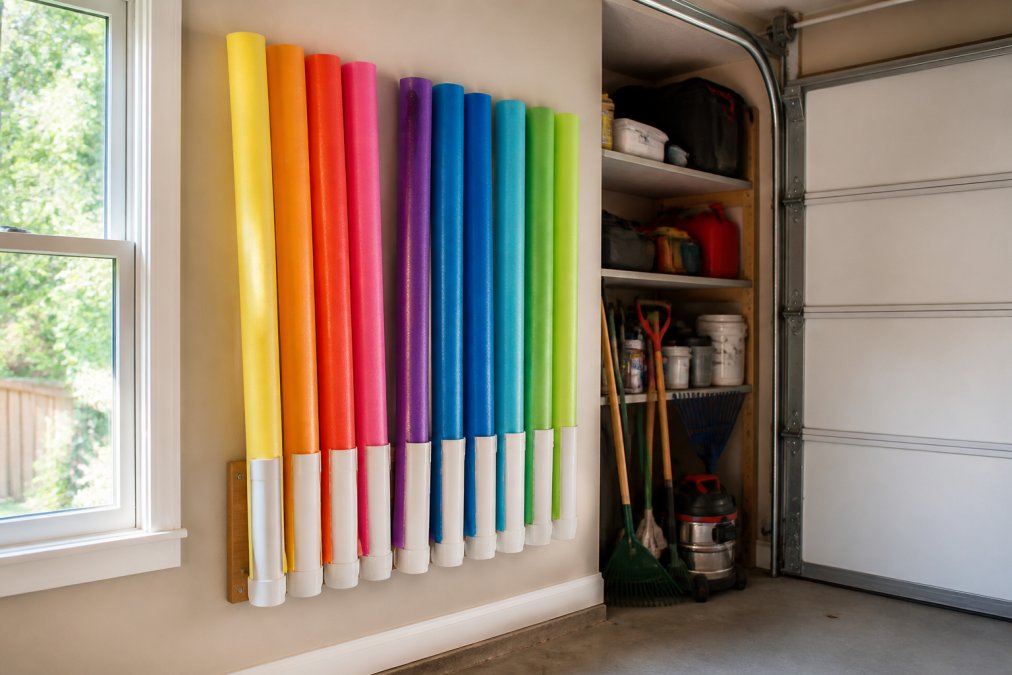
PVC Pipe Rack Construction
A PVC pipe rack uses horizontal pipes mounted to a wall, creating slots where noodles rest. You'll need schedule 40 PVC pipes (2-inch diameter), connectors, brackets, and wall anchors. Assemble into a grid using T-connectors and elbows, then secure to studs. This keeps noodles off the ground, improves air circulation, and makes them easy to access.
Wall-Mounted Storage Solutions
Wall-mounted racks maximize vertical space using heavy-duty hooks or brackets. Install a horizontal rail and hang noodles with carabiners or bungee cords looped through the hollow core. Alternatively, mount a wooden ladder horizontally, each rung becomes a slot. Ensure brackets are rated for total weight.
Mesh Basket Organization
Mesh baskets offer flexible, portable storage with open weave for air circulation. Stack vertically to hold 3-6 noodles per basket. Label by size or color for quick identification.
Choosing the Right Pool Noodle Rack
Choose storage based on collection size and climate. Small collections (1-4) need wall hooks; medium (5-12) need wall racks or PVC frames; large collections need multi-tier systems. In humid climates, prioritize air circulation. In dry climates, enclosed storage protects from dust and UV damage.
| Storage Type | Best For | Space Required | Cost Range | Air Circulation |
|---|---|---|---|---|
| Wall hooks | 1-3 noodles | Minimal | $10-20 | Excellent |
| PVC pipe rack | 6-12 noodles | 2-4 sq ft | $30-60 | Very good |
| Mesh baskets | 5-10 noodles | 1-2 sq ft | $25-50 | Very good |
| Wooden ladder | 4-8 noodles | 2 sq ft | $40-80 | Excellent |
| Storage cabinet | 8-15 noodles | 3-4 sq ft | $100-200 | Fair |
Pool Noodle Maintenance Tips for Long-Term Storage
Proper maintenance before and during storage extends noodle life significantly by preventing the three primary failure modes: mold and mildew colonization, UV-induced brittleness, and moisture-trapped foam degradation.
Understanding Foam Degradation in Storage
Pool noodles are made from expanded polyethylene (EPE) foam. Mold inside foam is difficult to remove and compromises structural integrity. UV exposure breaks down foam over time, causing brittleness and loss of buoyancy, a process that accelerates in warm climates or near heat sources.
Pre-Storage Cleaning Protocol
Clean noodles with mild soap and lukewarm water to remove chlorine, salt, sunscreen, and algae. Pay special attention to the hollow core. Rinse completely, then air-dry in shade. Use a fan in humid climates to ensure the hollow core dries completely. A noodle that feels damp still contains internal moisture and is not ready for storage.
Inspection for Existing Damage
Press your thumb into the foam; it should spring back immediately. If it leaves a permanent indent or feels mushy, the foam is compromised and should be retired. Minor wear is normal. Any visible mold, mildew, or musty odor requires cleaning with dilute bleach (1:10 ratio), thorough rinsing, and complete drying before storage.
Storage Environment Selection
Store noodles in a cool, dry location (50-75°F, humidity below 60%). A climate-controlled garage, basement, or closet works well. Avoid unheated spaces where temperature and humidity fluctuate. If outdoor storage is necessary, use a weatherproof, opaque cover that allows air circulation underneath. Elevate noodles off the ground to prevent water pooling.
Weight and Pressure Management
Monitoring During Storage
For storage longer than 3 months, inspect every 4-6 weeks for musty odors and visible mold. Remove affected noodles and clean with dilute bleach. In high-humidity climates, use silica gel packets or a dehumidifier near stored noodles, replacing packets every 2-3 weeks.
Oodles of Noodles® AquaFold Duo™ →
Off-Season Storage Protocols
End-of-season storage requires a different approach than short-term storage. Preparing noodles for months of dormancy prevents mold, pest damage, and material degradation that can surprise you when you pull them out next season. Protecting your equipment from the elements is a vital part of seasonal maintenance that extends to other pontoon boat accessories designed to keep your vessel secure during the winter months.
Timing and Seasonal Considerations
Begin off-season storage as soon as pool use drops significantly, typically late August or early September in most climates. Do not wait until the first frost or cold snap; noodles stored while still warm and slightly damp are at higher risk for mold growth during the cool, humid months ahead.
Pre-Storage Preparation
Before packing noodles away, clean and dry them completely as described in the maintenance section above. This is non-negotiable for off-season storage; any residual moisture or debris will accelerate degradation over months of dormancy.
Pest Prevention and Containment
Pests, particularly rodents, insects, and spiders, are attracted to foam storage areas because they provide shelter and nesting material. To prevent infestation:
- Use sealed containers. Store noodles in plastic bins with tight-fitting lids rather than open mesh baskets or tarps. Rodents can chew through mesh and tarps easily, but they struggle with rigid plastic containers.
- Elevate storage off the ground. Place bins on shelves or pallets at least 12 inches above the floor. This prevents rodents from nesting underneath and makes inspection easier.
- Inspect the storage area. Before placing noodles in storage, check for gaps, cracks, or holes where pests could enter. Seal any openings with caulk or weatherstripping.
- Avoid pesticide-treated storage areas. Do not store noodles in spaces recently treated with insecticides or rodent poison; chemical residue can degrade foam and contaminate the noodles.
- Check noodles monthly during winter. Rodents may chew or nest in stored noodles. A monthly inspection catches damage early and allows you to relocate noodles if pests are active in the storage area.
Organization and Inventory Management
Organize noodles so you can easily see what you have without moving everything. A labeled inventory system saves time and prevents buying duplicates next season. Take a photo of your collection before storing it, or create a simple spreadsheet listing noodle colors, sizes, and quantities. This reference is invaluable when planning next season's pool activities.
Mid-Storage Inspection Schedule
For storage periods of 6 months or longer, perform a thorough inspection every 8-12 weeks:
- Visual check for mold. Look for white, green, or black spots on the foam surface or inside the hollow core. A musty or sour odor indicates mold growth even if spots aren't visible.
- Check for pest activity. Look for droppings, chew marks, or nesting material inside bins or on noodle surfaces.
- Assess moisture levels. Feel the noodles; they should be dry to the touch. If they feel cool or damp, increase ventilation or move them to a drier location.
- Verify container integrity. Ensure plastic bins are still sealed and undamaged. Replace lids if they've cracked or warped.
Spring Retrieval Preparation
Before pulling noodles out of storage for the new season, allow them to acclimate to room temperature for 24 hours if they've been stored in a cold space. This prevents condensation from forming on the foam surface. Inspect all noodles one final time for mold, damage, or pest activity. Clean them lightly with a damp cloth if dust has accumulated, and allow them to air-dry in shade before use.
Safe Storage for Families with Children
Storing noodles safely around children requires thoughtful placement and organization. Noodles are toys, but they need to be accessible in a way that prevents hazards.
Frequently Asked Questions
What is the best way to keep pool noodles from blowing away?
Store pool noodles in a designated container or on a secured rack away from high-traffic areas. Use bungee cords or heavy-duty hooks to anchor noodles to a wall or storage structure. For outdoor storage, place noodles in a mesh basket or deck box that won't tip over in wind. Keeping them in a garage, shed, or covered area eliminates wind exposure entirely. The AquaFold Duo's compact folded design makes it easier to store securely in tight spaces where wind won't disturb it.
How do you organize pool noodles in a small space?
Vertical storage is your best option for limited space. Wall-mounted racks, PVC pipe holders, or mesh baskets hung on studs maximize vertical real estate without taking up floor space. The AquaFold Duo foldable pool noodle is specifically designed for tight spaces, folding in half to reduce storage footprint by 50%. You can also store noodles inside closets, under decks, or in overhead garage racks. Rolling storage bins with wheels let you tuck noodles away and move them as needed.
Should pool noodles be stored vertically or horizontally?
Vertical storage is generally better for pool noodles because it prevents permanent creasing and maintains their shape over time. Horizontal stacking can cause noodles to develop flat spots or cracks where they rest. However, if space is extremely limited, horizontal storage in a wide, flat container works temporarily. The key is rotating noodles periodically if stored horizontally and avoiding heavy items on top. Vertical wall racks, PVC pipe holders, and mesh baskets all support proper vertical positioning while keeping noodles organized and accessible.
How can I protect my pool noodles from sun damage while in storage?
Store noodles in a shaded location away from direct sunlight, such as a garage, shed, or covered porch. UV rays break down foam material over time, causing brittleness and discoloration. If outdoor storage is necessary, use a weather-resistant storage box or cover with a tarp. Keep noodles out of extreme heat, which can warp foam. Indoor storage in a cool, dry area extends noodle lifespan significantly. For off-season storage lasting months, a basement or climate-controlled space is ideal. Regularly inspect stored noodles for signs of sun damage or material degradation.