

Table of Contents
- Why Camps Buy Bulk Aquatic Foam Supplies
- What to Look For in Bulk Aquatic Foam Supplies for Camps
- Top Bulk Aquatic Foam Supplies for Camps
- Jumbo Pool Noodles and Specialty Foam for Camp Programs
- Aquatic Foam Maintenance Tips for Camp Facilities
-
Environmental Safety and Wildlife Impact
- Why Foam Fragments Are a Different Problem Than Other Litter
- Material Selection: What to Look For and What to Avoid
- Containment: Keeping Foam Out of the Water in the First Place
- Shoreline Cleanup and Foam-Specific Protocols
- Working With Local Wildlife and Water Quality Requirements
- A Note on End-of-Life Disposal
- How to Choose the Right Bulk Order for Your Camp
- Frequently Asked Questions
Last Updated: September 15, 2026
Why Camps Buy Bulk Aquatic Foam Supplies
Bulk aquatic foam supplies for camps solve a problem single-unit purchases cannot: outfitting an entire waterfront program without running short mid-season. A camp with 200 swimmers needs enough foam for every session, age group, and replacement after a noodle gets chewed, sun-cracked, or lost.
This guide from FoamNoodles covers what to order, how to evaluate foam quality, and how to store it so it survives more than one summer. The stakes are higher than they look. Swimming is consistently among the most popular camp activities, and the American Camp Association's health and safety guidance treats adequate, well-maintained water equipment as part of a safe waterfront program.
Buying in bulk also changes your unit economics. A 12-count pack spreads the cost across an entire cabin group, and most suppliers ship it free.
What to Look For in Bulk Aquatic Foam Supplies for Camps
Aquatic foam supplies are foam products designed for use in and around water, where buoyancy, durability, and material safety matter more than on dry land. For camps, three variables decide whether a purchase holds up: density, dimensions, and material certification.
Foam Density, Dimensions, and Buoyancy
Density drives everything. A denser foam compound holds its shape under repeated use, resists tearing at the hollow core, and keeps buoyancy consistent all season. Cheaper foam compresses, absorbs water at the cut ends, and goes limp within weeks.
Standard foam noodles run roughly 48 inches long, 2.5 inches in diameter, with a 1-inch hollow core that lets you thread rope through for lane markers, obstacle courses, and relay games.
| Specification | Typical Value | Why It Matters for Camps |
|---|---|---|
| Length | ~48 inches | Fits standard lane and relay setups |
| Diameter | ~2.5 inches | Comfortable grip for all ages |
| Core | 1-inch hollow | Threading rope, mounting, storage racks |
| Material | Dense foam compound | Holds buoyancy across a full season |
Safety Certifications and Material Standards
Look for foam certified to ASTM F963-17, the consumer safety specification for toy safety, and confirm it is free from BPA, phthalates, and PVC (astm.org). Camps serving children should treat these as baseline requirements, not upgrades. FoamNoodles noodles carry ASTM F963-17 certification for ages 5 and up and are made in North America with no harmful chemicals.
Pricing and Bulk Order Expectations
Bulk foam is priced per pack, not per unit. FoamNoodles sells 12-count packs at $48.99 with free shipping on every order, roughly four dollars per noodle. Compared to retail singles, the bulk route wins on cost and consistency of supply.
Top Bulk Aquatic Foam Supplies for Camps
The most reliable bulk option for most camps is a 12-count pack of standard 48-inch foam noodles, in single colors for group assignments or assorted packs for general use. Color-coding by cabin or activity makes distribution and cleanup faster.
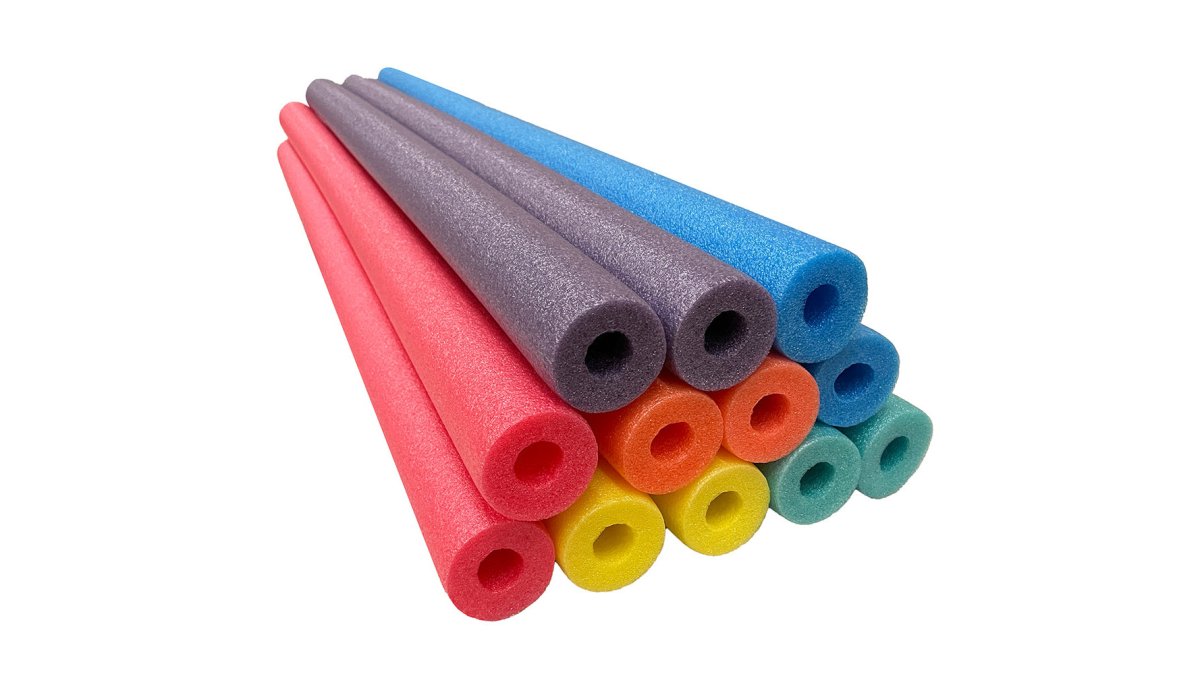
Oodles Of Noodles Assorted - 12 Pack
The assorted pack is the default choice for camps running mixed-age programming. Each 12-pack includes purple, red, blue, orange, yellow, and green noodles, so you can hand out colors by group without ordering six separate SKUs. Same 48-inch length, dense foam compound, and ASTM F963-17 certification. At $48.99 with free shipping, it is the simplest way to stock a full waterfront.

Oodles Of Noodles Blue - 12 Pack
Blue is the workhorse color: water-appropriate, hides minor scuffs better than light colors, and easy to spot as swim-program stock versus craft-cabin stock. Campers use blue noodles for pool games, and counselors pull them for padding and DIY projects between sessions.
Oodles Of Noodles Green - 12 Pack
Green noodles blend into outdoor settings, making them the practical pick for garden projects, nature programming, and outdoor obstacle courses. They are also the color most likely to be repurposed for plant supports and landscaping after swim season.
Oodles Of Noodles Red - 12 Pack
Red is the high-visibility option, used for lifeguard markers, boundary lines, and any application where a camper must spot the noodle from across the water. They also double as holiday programming decoration.
Jumbo Pool Noodles and Specialty Foam for Camp Programs
Jumbo pool noodles are oversized foam tubes with a larger diameter than the standard 2.5-inch noodle, built for higher buoyancy and heavier-duty use. They suit teen programming, water polo variants, and float-based games where a standard noodle lacks lift.
If your waterfront runs adaptive programming, jumbo noodles give campers with limited grip strength more surface to hold. The tradeoff is storage: jumbo foam takes noticeably more rack space, so plan off-season storage before ordering a full pallet.
For most camps, the practical answer is a mixed order: standard 12-packs for daily programming, plus a smaller quantity of jumbo foam for specialty activities. FoamNoodles stocks foam types beyond pool noodles, including craft and construction foam.
Aquatic Foam Maintenance Tips for Camp Facilities
Aquatic foam maintenance for a camp is not the same as for a single backyard noodle. You are managing a rotating inventory of dozens or hundreds of pieces across sessions, cabins, and storage locations, and the failure modes are predictable. The three habits that matter most are rinse after every use, dry completely before storage, and inspect on a fixed schedule, but the real value is knowing how to triage, patch, and retire foam so you are not replacing the whole inventory every June. Extending the lifespan of your aquatic inventory requires the same disciplined oversight you apply to other essential camp gear, much like the logistical planning required for quick setup chairs for sports parents.
A Weekly Inspection Routine That Actually Catches Failures
Most foam damage starts small and invisible: a pinhole tear at the hollow core becomes a full-length split within weeks of flexing.
How to Patch and Repair Foam Noodles
A common pattern among camp maintenance staff is:
When to Retire Foam Instead of Repairing It
Off-Season Storage That Protects the Inventory
Building a Replacement Reserve
Environmental Safety and Wildlife Impact
Why Foam Fragments Are a Different Problem Than Other Litter
Material Selection: What to Look For and What to Avoid
When evaluating a bulk order, ask the supplier directly:
Containment: Keeping Foam Out of the Water in the First Place
Shoreline Cleanup and Foam-Specific Protocols
Working With Local Wildlife and Water Quality Requirements
A Note on End-of-Life Disposal
How to Choose the Right Bulk Order for Your Camp
Frequently Asked Questions
What types of foam are best for aquatic camp activities?
Closed-cell polyethylene foam works best for aquatic camp gear because it resists water absorption and holds up to repeated use. Look for noodles with a denser proprietary foam compound, like the ones from FoamNoodles, which are approximately 48 inches long, 2.5 inches in diameter, with a 1-inch hollow core. These are free from BPA, phthalates, and PVC, and certified ASTM F963-17 for ages 5 and up, making them a solid fit for camp programs.
How do you maintain aquatic foam gear for long-term camp use?
Rinse foam noodles with fresh water after every pool or lake session to remove chlorine, salt, and debris. Let them air-dry completely in the shade before stacking, since trapped moisture breaks down foam over time. Store them off the ground in a ventilated bin or on a rack. Rotate stock so older noodles get used first, and inspect for cracks or crumbling at the start of each camp session. These aquatic foam maintenance tips can add multiple seasons to your supply.
What are the safety benefits of using jumbo pool noodles in camp programs?
Jumbo pool noodles offer more surface area and buoyancy than standard noodles, which helps younger or less confident swimmers stay afloat during supervised water activities. Their larger diameter also makes them easier to grip. For camps, the key is pairing them with proper lifeguard supervision and checking that each noodle meets ASTM F963-17 safety standards. FoamNoodles' 12-packs ship free and are certified for ages 5 and up.
How can camps store bulk aquatic foam supplies efficiently?
Store bulk noodles horizontally in ventilated bins or on wall-mounted racks to prevent bending and moisture buildup. Keep them out of direct sunlight, since UV exposure degrades foam over time. Label bins by color or session group so counselors can grab what they need quickly. If you order multiple 12-packs from FoamNoodles, break them into smaller bundles for each activity area rather than storing everything in one pile.
What is the difference between standard and heavy-duty aquatic foam?
Standard aquatic foam is lighter and less dense, which keeps costs down but means it compresses faster under heavy use. Heavy-duty foam uses a denser compound for better buoyancy, rigidity, and resistance to tearing, which matters for camps running daily water programs. FoamNoodles' noodles use a denser proprietary foam compound than typical retail options, giving them more stiffness and flotation. For high-traffic camp seasons, the heavier option usually lasts longer.