
Durable Pool Noodles for Summer Camps: 2026 Picks
Editorial TeamTable of Contents
- Quick Comparison: Best Pool Noodles for Camp Programs
- What Makes Pool Noodles Last Through a Full Camp Season
- Jumbo Pool Noodles: The Workhorses of Camp Water Games
- Bulk Pool Noodles for Camps: Pricing and Pack Options
- Pool Noodle Maintenance Tips for Shared Equipment
- Storage, Lifecycle and Replacement Planning
- Frequently Asked Questions
Last Updated: September 11, 2026
Quick Comparison: Best Pool Noodles for Camp Programs
Durable pool noodles for summer camps have to survive eight weeks of chlorine, sun, and hundreds of kids. This guide breaks down what holds up, what fails by July, and how to buy in bulk without overspending.
A cheap noodle is often the most expensive purchase of the summer: one that crumbles in three weeks means mid-season reordering, rush shipping, and stalled aquatic programming.
Here's the short version before we get into the details:
| Option | Price | Best For | Key Strength |
|---|---|---|---|
| Mega Pool Noodle (6 ft x 5 in) | $42.99 | Deep-water games, older campers | Solid core, maximum buoyancy |
| Short Mega Jumbo (3 ft x 5 in) | $24.99 | Younger campers, shallow water | Easy grip, solid core |
| Exercise Dock (V-shape) | $34.99 | Water aerobics, swim instruction | Cradles body alignment |
| AquaFold Duo (foldable) | $25.99 | Travel, tight storage | Folds in half |
| Jumbo 6-Pack (55 in) | $85.99 | Bulk camp supply | Free shipping |
That last row is where most camps should start: a six-pack of jumbo noodles at $85.99 works out to roughly $14.33 per noodle, shipped free.

What Makes Pool Noodles Last Through a Full Camp Season
The biggest factor in noodle lifespan is foam density and cell structure. High-density EPE foam resists the water absorption that destroys cheap noodles from the inside out.
Foam Density, Closed-Cell Construction and Water Absorption
Closed-cell foam seals each gas pocket off from its neighbors, preventing water from migrating through the material. A waterlogged noodle loses buoyancy and gains weight.
Look for these markers of quality construction:
- Solid core or a tight, small center hole rather than a wide hollow channel
- Firm surface that springs back when you press a thumbnail into it
- Consistent color with no mottled or chalky patches
- No chemical smell when you open the shipping bag
The Oodles of Noodles jumbo line uses a proprietary polyethylene foam compound that's denser than standard pool noodles, which improves both buoyancy and stiffness. The company manufactures in North America and certifies its noodles to ASTM F963-17 for ages 5 and up, a safety standard set by ASTM International.
Chlorine, UV and the Wear of Daily Commercial Use
Chlorine and UV light age a noodle fastest. UV-stabilized foam holds color and structure longer in direct sun, while chlorine-resistant formulations resist the degradation that turns noodles tacky and brittle.
A residential noodle might see ten afternoons of use in a season; a camp noodle sees that in a week. Rotate stock so none sits in the sun all day, and store them out of direct light between sessions.
Jumbo Pool Noodles: The Workhorses of Camp Water Games
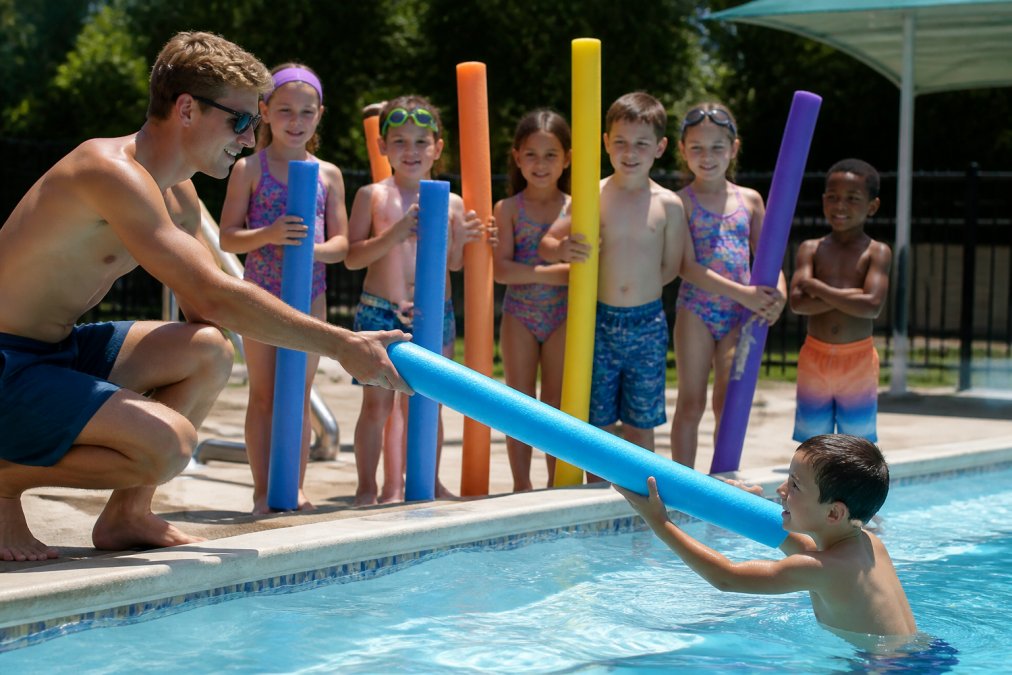
Jumbo pool noodles earn their place because thicker foam means more buoyant support and greater tear resistance. At 5 inches in diameter, one supports an older camper or adult instructor without folding under load.
The Mega Pool Noodle measures 6 feet long and 5 inches across, with a solid core and no center hole, the noodle I'd hand a swim instructor running deep-water drills. At $42.99 it outlasts three cheap ones.
Mega and Shorty Jumbo Sizes for Different Age Groups
Size matching matters more than most programs realize. A 6-foot noodle is unwieldy for a six-year-old and a 3-foot noodle offers too little support for a teenager in deep water.
- Ages 5-8: Short Mega Jumbo, 3 ft x 5 in, $24.99. Light enough for small hands to grip and maneuver.
- Ages 9-13: Standard jumbo, 55 in x 3.25 in, sold in six-packs at $85.99.
- Ages 14+ and adults: Mega Pool Noodle, 6 ft x 5 in, $42.99, for maximum buoyant support.
- Swim instruction and therapy: Exercise Dock, $34.99, with a V-shape that cradles body alignment.
Bulk Pool Noodles for Camps: Pricing and Pack Options
Ordering in six-packs is the difference between a workable aquatic budget and a blown one. A single jumbo noodle costs more per unit than the same noodle in a six-pack, and bulk orders ship free.

Here's how the math works for a camp running 60 campers through water games:
| Pack Size | Unit Price | Total | Noodles Needed for 60 Campers | Total Cost |
|---|---|---|---|---|
| Single Shorty Mega Jumbo | $24.99 | $24.99 | 60 | $1,499.40 |
| Jumbo 6-Pack | $14.33 | $85.99 | 60 (10 packs) | $859.90 |
| Mega Pool Noodle (single) | $42.99 | $42.99 | 30 (shared) | $1,289.70 |
The six-pack wins on cost per noodle. Colors include blue, red, lime, orange, brown, and black, so you can color-code by age group or activity station, and bulk purchasing means one shipment rather than a dozen retail runs. durable swimwear options.
How Many Noodles Does a Camp Actually Need?
The number most programs get wrong is the noodle-to-camper ratio. A 1:1 ratio sounds safe on paper but ignores rotation, drying time, and the fact that not every camper is in the water at once.
A workable planning framework:
- Swim lessons (structured, one noodle per camper): 1 noodle per camper in the water, plus 15% spare stock for damage and drying rotation.
- Free swim and games (shared use): 1 noodle per 2 campers, since noodles get passed, stacked, and swapped between activities.
- Water aerobics or instruction stations: 1 noodle per participant, plus instructor noodles in the jumbo or V-shape size.
For a 60-camper program running structured lessons, that means roughly 69 noodles on hand, 60 in rotation and 9 in reserve. Ten six-packs plus a small buffer of singles covers the season without a mid-summer reorder.
Pack Sizes and When Each One Makes Sense
Bulk pricing tiers usually break down into three practical buckets:
- Singles: Best for testing a new noodle style, replacing one damaged unit, or filling a specialty role like the V-shape Exercise Dock. Worst cost per noodle.
- Six-packs: The default for most camps. Low enough to spread across activity stations, high enough to unlock per-unit savings and free shipping.
- Multi-case orders (10+ packs): Where the real per-unit savings land for large programs. This is the tier to negotiate if you're outfitting a full aquatics department or multiple camp locations.
Cost-Per-Use: The Number That Actually Justifies the Budget
Unit price alone doesn't tell you whether a noodle is a good buy. The metric that survives a budget review is cost per use: total cost divided by the camper-sessions the noodle survives.

A cheap noodle that fails in three weeks and is replaced twice costs more per use than a denser jumbo noodle that lasts eight weeks. Run the math on your own program:
- Estimate camper-sessions per noodle per week (sessions × weeks).
- Divide the noodle's purchase price by that total.
- Compare that figure across your options, not the sticker price.
The denser jumbo noodle often wins on cost per use even when it loses on upfront price, because it survives the whole season instead of being reordered in July.
Bulk Buying Logistics Worth Planning For
A few operational details separate a smooth bulk order from a mid-season scramble:
- Order once, early. Placing your full-season order before camp starts locks in pricing and avoids rush shipping later.
- Confirm the safety certification. Noodles certified to ASTM F963-17 for ages 5 and up meet the toy safety standard set by ASTM International, which matters when equipment is shared across age groups.
- Check the return and replacement policy. A damaged-on-arrival noodle should be replaceable without a full reorder.
- Store the surplus properly. Spare stock left in a hot shed or a sealed bin degrades before it ever hits the water, see the storage section below.
Pool Noodle Maintenance Tips for Shared Equipment
Shared equipment needs a cleaning routine, not just a rinse. A quick protocol between sessions keeps foam hygienic and extends usable life by removing the chlorine residue and body oils that break down foam surfaces.
Sanitizing Noodles Between Sessions
Rinse noodles with fresh water after every session to remove chlorine and sunscreen residue. Once a day, wipe surfaces with a mild soap solution and let them air dry completely before storage. Never store damp noodles in a sealed bin; trapped moisture encourages mold growth inside the foam (the CDC).
A simple daily routine looks like this:
- Rinse all noodles with fresh water at end of session
- Wipe with diluted mild soap using a soft cloth
- Stand upright to air dry fully, ideally in shade
- Inspect for tears, soft spots, or crumbling edges
- Pull damaged noodles from rotation immediately
- Return dry noodles to ventilated storage
Pull damaged noodles from circulation the moment you spot them, a torn noodle sheds foam particles into the water and campers' mouths.
Storage, Lifecycle and Replacement Planning
Storage conditions determine whether a noodle lasts one season or three. Heat, direct sun, and compression are the enemies; a shaded, ventilated rack solves all three.
For high-volume inventory, horizontal racking or large mesh bins beat stacking noodles in a pile, which crushes bottom layers into permanent flat spots. Keep storage out of direct sunlight and away from pool chemicals, since fumes degrade foam.
High-Volume Storage Systems for 50+ Noodles
Once you're managing dozens of noodles, a pile on the deck stops working, they crush each other, trap moisture, and turn handouts into a five-minute dig. Better setups:
- Horizontal wall racks: PVC or coated-steel racks mounted at chest height hold noodles in single layers, so nothing bears weight. Best for a dedicated equipment room or shaded wall.
- Mesh storage bins: Large breathable bins let air circulate around stacked noodles and drain any residual water. Choose mesh over solid plastic, sealed bins trap moisture and grow mold.
- Rolling carts: For programs that move between pool areas or between indoor and outdoor sessions, a wheeled rack keeps noodles organized in transit and doubles as a handout station.
- Color-coded zones: If you color-code by age group or skill level, dedicate one rack section or bin per color. Staff can pull an entire group's noodles in one motion.
Whatever system you choose, keep noodles off the concrete deck and out of direct sun between sessions. A shaded, ventilated rack is the highest-impact storage upgrade for a camp program.
Lifecycle and Replacement Cycle Analysis
Plan your replacement cycle around usage intensity, not the calendar:
- Heavy use (daily, 8+ weeks): Inspect weekly, expect to replace 20-30% of stock each season
- Moderate use (3-4 days per week): Inspect biweekly, replace 10-15% each season
- Light use (special events only): Inspect monthly, replace as needed
To turn that into a budget line, track cost per use rather than cost per noodle: divide the purchase price by the camper-sessions the noodle survives. A denser jumbo noodle that lasts the season often costs less per use than a cheaper one replaced twice. A spreadsheet tracking purchase date, sessions used, and condition reveals your real replacement rate after one season.
End-of-Life: Reuse, Recycling, and Disposal
When a noodle reaches end of life, don't just toss it. Foam waste is a real concern for camps running large inventories, and a few options extend the material's usefulness:
- Downcycle into craft stock. Clean, worn noodles can be cut into smaller pieces for arts and crafts, sensory bins, or obstacle-course markers.
- Check municipal recycling. Some municipal programs accept clean polyethylene foam; many don't, so confirm before you haul a load to the curb.
- Look for specialty foam recyclers. Craft and shipping-supply recyclers sometimes take clean foam. Call ahead, most want it free of tape, dirt, and chlorine residue.
- Retire damaged noodles immediately. A torn or crumbling noodle sheds foam particles into the water and into campers' mouths. Pull it from rotation the moment you spot damage.
A short end-of-season audit, how many noodles survived, how many were replaced, and the cost per use, gives you the data to buy smarter next year and justify the aquatics line in your budget.
Frequently Asked Questions
Are there pool noodles that don't disintegrate?
Yes. Noodles made from high-density polyethylene foam with a closed-cell structure resist water absorption and hold their shape far longer than cheap open-cell versions. Solid-core designs also eliminate the weak hollow center that splits first. FoamNoodles' Oodles of Noodles line uses a denser proprietary foam compound, so it stands up to repeated camp use.
How long will pool noodles last in a commercial setting?
In a summer camp or public pool, expect a quality closed-cell noodle to last one to two full seasons with regular use. Factors that shorten lifespan include direct UV exposure, chlorine, rough handling and poor storage. Rotating stock, rinsing after use and storing noodles out of direct sun can push a single set through multiple sessions before replacement.
What material makes a pool noodle more durable?
High-density polyethylene foam with closed-cell construction is the most durable option. Closed cells block water from soaking into the foam, which prevents the soggy, crumbling breakdown common in cheap noodles. Solid-core designs add further strength by removing the hollow center where cracks usually start. Density matters too: denser foam holds buoyancy and stiffness longer under daily commercial wear.
How do you store pool noodles to extend their lifespan?
Store noodles horizontally in a shaded, ventilated area, not compressed into tight bins or left in direct sun. Heat and UV break down foam over time, and stacking weight can warp longer noodles. For high-volume camp inventory, use wide storage racks or open crates that let air circulate. Rinsing and drying noodles before storage prevents chlorine and grime from working into the surface.
How do bulk pool noodles for camps compare in price?
FoamNoodles offers jumbo 6-packs in several colors at $85.99, which works out to roughly $14.33 per noodle. Single Mega Pool Noodles run $42.99, the Shorty Mega Jumbo is $24.99, and the AquaFold Duo foldable noodle is $25.99. For camps buying dozens at once, the 6-packs deliver the lowest per-unit cost and ship free.
Running a camp aquatic program means balancing durability against budget, and the two aren't actually in conflict once you buy the right foam. FoamNoodles supplies closed-cell, high-density noodles built for exactly this kind of repeated commercial use, with bulk six-packs that ship free, a range of jumbo and shorty sizes for every age group, and a foldable option for programs short on storage space. Get started with FoamNoodles and stock your program with noodles that survive past July.