

Table of Contents
- What Are Hollow Pool Noodles?
- Understanding Pool Noodle Hole Size
- 52-Inch Pool Noodles: Standard Size Explained
- Jumbo Pool Noodles for Maximum Flotation
- Common Uses for Hollow Pool Noodles
- Durability, Care, and Long-Term Value
- Frequently Asked Questions
Last Updated: October 8, 2026
What Are Hollow Pool Noodles?
Hollow pool noodles are lightweight EPE foam tubes with an empty center core, built for flotation, recreation, and multipurpose use. The tubular construction makes them versatile: thread rope through them, wrap them around objects, or use them as they come.
The hollow design serves a practical purpose beyond cost savings. The empty channel allows for pool games, water fitness exercises, craft projects, and protective padding around posts and pipes.
Hollow vs. Solid-Core Construction
The difference between hollow and solid-core noodles comes down to material density, flotation capacity, and intended use. Solid-core designs provide denser support when you need the noodle to stay rigid under weight or pressure.
For most recreational and craft applications, hollow construction is the practical choice: the empty core lets you compress it for storage, thread objects through it, or cut it without waste. Solid-core noodles are heavier, bulkier to store, and less versatile for DIY projects.
Foam Material and Safety
All our hollow pool noodles are made from EPE foam, a closed-cell material that's non-toxic, BPA-free, and safe for skin contact. EPE foam doesn't absorb water, so your noodles won't become waterlogged or develop mold.
Safety certifications matter. Our products are certified to ASTM F963-17 standards, which verify toy safety and material composition, confirming the foam contains no harmful chemicals and meets rigorous testing for durability and non-toxicity.
Understanding Pool Noodle Hole Size
The hole size, or inner diameter, of a hollow pool noodle determines how much foam surrounds the center, driving flotation, stiffness, and how well the noodle fits whatever you thread through it. Two noodles can share the same 3.5-inch outer diameter and behave completely differently once the core changes.

Inner Diameter and Wall Thickness
A noodle with a 0.5-inch core and 1.5-inch walls carries far more foam volume than one with a 1-inch core and 0.75-inch walls, even though both measure the same across the outside.
Measure before you buy. Outer diameter is easy: lay the noodle flat and run a tape across the widest point. Inner diameter is trickier because the foam compresses; insert a rigid dowel or tool handle and measure the dowel, not the squishy opening.
How Hole Size Affects Flotation and Durability
A larger hollow core removes foam volume, reducing buoyancy and stiffness while saving weight. A smaller core adds foam volume, increasing buoyancy, resistance to bending, and impact absorption, at the cost of weight and flexibility.
Durability tracks wall thickness more than any other dimension. Thin walls split at the bend point when folded sharply and tear faster when dragged across concrete or decking.
Fit Compatibility: Connectors, Rope, and Accessories
Hole size is also a fit question. A hollow core lets you thread rope, bungee cord, or paracord through the noodle to string several together, anchor one to a pool ladder, or hang them for storage.
If you plan to slide noodles over posts, rails, or pipe, measure the post first and choose a core slightly larger so the foam grips without splitting.
Hollow Versus Solid Core: What the Core Changes
Hollow and solid-core noodles are not interchangeable. A hollow noodle of a given outer diameter contains less foam than a solid one, so it weighs less and bends more easily.
For flotation, the gap is smaller than people expect. Both designs displace water. The real divergence is handling: hollow noodles compress for storage, thread onto rope and pipe, and cut cleanly for craft and padding projects.
52-Inch Pool Noodles: Standard Size Explained
The 52-inch length works comfortably for children and adults, and stores easily in typical closets or garages, long enough for meaningful flotation support but short enough to handle without awkwardness.
For water fitness training, a 52-inch noodle lets you hold it horizontally across your body for balance exercises or vertically for upper-body support. Parents find this length ideal for teaching children water confidence: substantial enough for real support without being intimidating.
Storage and transport are easier with 52-inch noodles than longer alternatives: a standard closet shelf holds several horizontally, and they fit in most car trunks without special arrangement. For bulk orders to a camp, resort, or contractor supply, 52-inch noodles maximize storage efficiency relative to the flotation or padding they provide.
Jumbo Pool Noodles for Maximum Flotation
Jumbo pool noodles break the standard size ceiling, delivering more flotation, buoyancy, and visual impact than conventional 52-inch options. A jumbo noodle typically measures 54 inches or longer with a wider diameter, often 4.5 to 5 inches across, creating more surface area for flotation and support.
Giant Noodle Dimensions and Weight Capacity
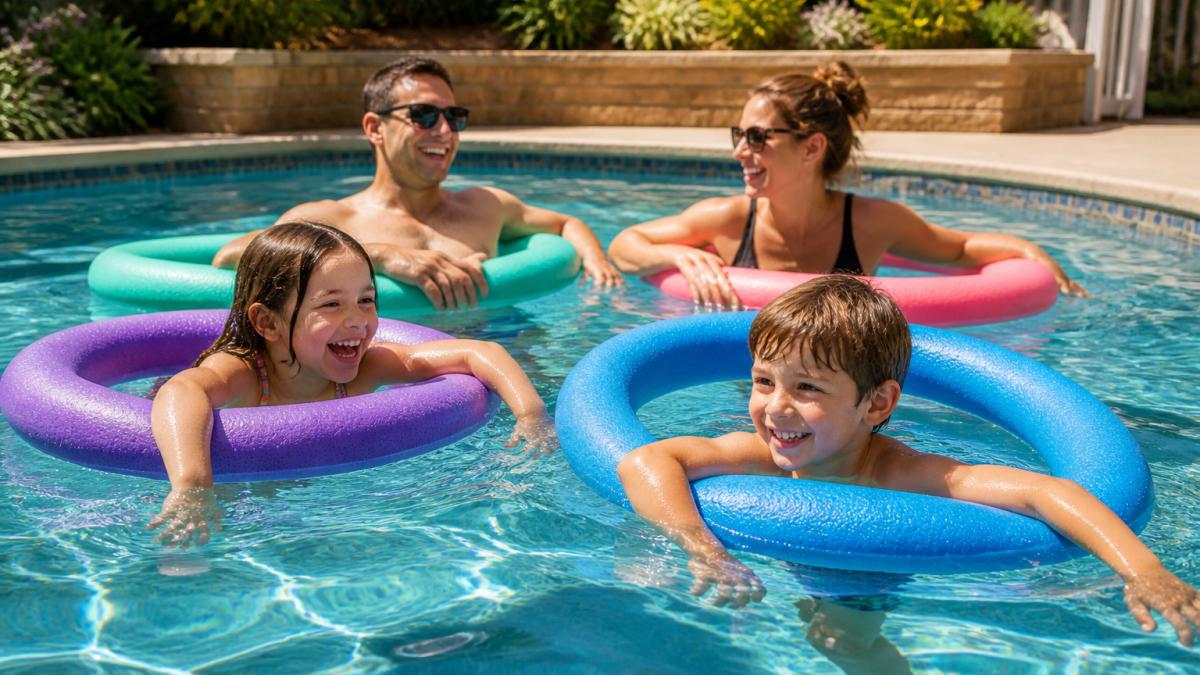
Our OodleMaxx Giant Pool Noodle measures 54 inches long with a 4.5-inch width and a 2.5-inch hollow core. This extra width creates substantially more buoyancy, making it the preferred choice for full-body support and lounging. A jumbo noodle can comfortably support two children or one adult with stable flotation.
Weight capacity depends on foam density and overall volume. A jumbo noodle with thicker walls supports more weight without compressing fully.
OodleMaxx Giant Pool Noodle Blue- 1, 3, 12 Count Packs →
When to Choose Jumbo Over Standard
Choose jumbo noodles for maximum comfort, enhanced stability, or activities beyond basic recreation. Adults prefer jumbo noodles for lounging because they provide more surface area and distribute weight more evenly than standard sizes.
For craft and construction applications, jumbo noodles offer more material to work with: cut them into sections for multiple projects, wrap them around larger posts, or use them as substantial protective padding.
Common Uses for Hollow Pool Noodles
Hollow pool noodles serve purposes far beyond summer recreation. Their versatility, affordability, and durability make them practical for training, crafting, and safety applications across residential and commercial settings.
Swimming Training and Water Fitness
Water fitness instructors use hollow pool noodles as training aids for flotation exercises, balance work, and resistance training. Held horizontally, a noodle supports a swimmer's torso during balance drills.
Parents use noodles to teach children water confidence and basic swimming skills. A child holding a noodle horizontally can practice kicking without fear of sinking. The noodle provides psychological security while building muscle memory for proper body position.
Craft Projects and DIY Applications
Hollow pool noodles are popular for DIY projects because they're affordable, easy to cut, and need no special tools. Crafters use them to build foam structures, create pool toys, make protective bumpers for furniture, and design custom padding, and the EPE foam takes paint, glue, and markers.
Contractors and builders use hollow noodles as protective padding around posts, edges, and pipe installations. The pre-slit Clamp Foam Noodle Protection from FoamNoodles fits around pipes and posts without installation tools, preventing injuries from accidental contact with sharp or hard surfaces, particularly where children, elderly people, or workers move frequently.

Protective Padding and Safety
Safety applications drive significant demand for hollow pool noodles in commercial and residential settings.
The soft foam absorbs impact, reducing injury severity if someone strikes the padded surface. Making them valuable for environments serving vulnerable populations: children's facilities, senior care centers, and therapeutic spaces where impact protection matters.
Durability, Care, and Long-Term Value
Hollow pool noodles made from EPE foam resist the four things that kill lesser foam: water absorption, UV breakdown, chemical exposure, and compression fatigue. How well a noodle holds up depends on which of those it faces and how often, so match your care routine to your actual conditions.
What Actually Degrades a Pool Noodle
Waterlogging is the classic failure, but EPE foam's closed-cell structure blocks water at the cell wall. The real threats are more specific:
- Chlorine. Repeated exposure to chlorinated pool water gradually stiffens and discolors foam surfaces. Rinsing after use removes the residue before it works in.
- Saltwater. Salt crystals left in the foam draw moisture and abrade the surface over time. A fresh-water rinse after every saltwater session is the single most effective habit.
- UV and sun. Ultraviolet light breaks down foam surfaces, causing fading, brittleness, and surface cracking. Noodles left on a pool deck all summer age faster than noodles stored out of direct sun.
- Compression. Foam that sits under weight for months takes a permanent set. Stacking heavy items on stored noodles flattens them, and the flattening does not reverse.
- Physical wear. Dragging a noodle across concrete, decking, or gravel tears the outer skin and opens the path for everything above.
Chlorine, Saltwater, and Sun: A Practical Care Routine
Rinse noodles with fresh water after every use in a chlorinated or saltwater pool, then air dry completely before storage.
Store noodles in a cool, dry spot out of direct sunlight: a garage shelf, a basement closet, or covered outdoor storage.
Inspect noodles once a season. Small tears and punctures can be sealed with waterproof tape to extend usable life; large splits at the bend point usually mean the noodle is done.
Value by Unit and Intended Use
Price per noodle is the wrong number to compare. What matters is cost per season of useful life, which depends on wall thickness, foam density, and how hard you use the noodle.
Pack size should follow intended use, not the lowest sticker price. A single noodle suits one swimmer or one small project. A multipack covers a family, a set of pool toys, or a batch of craft projects without a second order.
Getting More Seasons From Every Noodle
A hollow EPE noodle that is rinsed, dried, stored out of the sun, and kept out from under heavy loads will typically hold its shape and buoyancy for multiple seasons. Treat the care routine as part of the purchase, and the per-season cost drops with every summer you get out of the same noodle.
Frequently Asked Questions
Are pool noodles hollow in the middle?
Most hollow pool noodles have a central hole running through their length, which reduces weight while maintaining flotation. The hole size varies by design, jumbo versions may differ. This hollow construction makes them easier to carry and store compared to solid-core alternatives, and the lightweight design suits both children and adults for swimming and recreational use.
What size is the hole inside a pool noodle?
The hole size in hollow pool noodles depends on the product design. Larger jumbo noodles may have proportionally different hole dimensions. Inner diameter and wall thickness together determine how much foam supports flotation and impact resistance. Checking product specifications before purchase ensures the noodle meets your needs for swimming, training, or craft projects.
What are hollow pool noodles used for?
Hollow pool noodles serve multiple purposes beyond recreation. They're essential for swimming training and water fitness exercises, providing flotation support for beginners and rehabilitation. Parents use them for child water safety. DIY enthusiasts and contractors repurpose them as protective padding for pool edges, pipes, and equipment. Craft projects like kayak stabilizers, foam pole protectors, and post padding all benefit from hollow noodle construction. Their lightweight, durable foam makes them practical for both personal and professional applications.
How do you choose the right size pool noodle?
Consider your primary use: standard 52-inch noodles work well for typical pool activities and training, while jumbo options provide extra buoyancy and support for larger swimmers or group activities. Check the inner diameter and wall thickness for durability, denser foam resists wear better. For craft or construction projects, measure the object you're protecting and match the hole size accordingly. Bulk purchasing options make it economical to stock multiple sizes for different needs.