

Table of Contents
- Why Pool Noodles Shred and Disintegrate
- How to Clean Pool Noodles Without Causing Damage
- Pool Noodle Storage Ideas That Prevent Damage
- Protective Coatings and DIY Sleeves
- Choosing Jumbo Pool Noodles With Durable Foam
- Common Mistakes That Shorten Noodle Life
- Final Tips for Long-Lasting Pool Noodles
- Frequently Asked Questions
Last Updated: September 7, 2026
Few things ruin a pool day faster than pulling out a noodle that has started shedding foam bits like a shedding dog. That disintegration is the classic sign of a noodle nearing the end of its life, and it often happens after just a few weeks of summer use. The good news is that this process is not random; it follows predictable patterns of sun, chemical, and physical stress. The strategies below are the ones that genuinely extend the life of your gear. Understanding how to prevent pool noodles from shredding starts with knowing exactly why the foam fails in the first place.
The primary culprit behind pool noodles shredding is ultraviolet (UV) degradation. Most noodles are made from polyethylene foam, a closed-cell material that is naturally hydrophobic and buoyant. However, prolonged sun exposure breaks down the polymer chains, making the surface brittle. Once that outer skin cracks, water and chlorine penetrate the open cells, accelerating the process from the inside out.
Why Pool Noodles Shred and Disintegrate
The breakdown of a pool noodle is a story of environmental assault rather than simple wear and tear. UV degradation is the lead actor, turning a flexible surface into a brittle, chalky shell that flakes off at the slightest touch. This is compounded by thermal expansion; when a noodle sits on a hot deck, the air inside expands and stretches the foam, creating micro-tears that become entry points for damage.
Chemical erosion plays a significant role as well. Chlorine and pool sanitizers are oxidizers, and they react with the foam surface, stripping away the smooth skin. Once that protective layer is gone, the foam acts like a sponge, absorbing water and becoming heavy and prone to tearing. The result is a cycle where surface abrasion from pool edges and concrete leads to fraying, which exposes more foam to chemicals and sunlight. For a deeper look at how UV radiation affects polymer materials, the National Renewable Energy Laboratory's research on polymer degradation provides a technical breakdown of the process.
How to Clean Pool Noodles Without Causing Damage
Cleaning is where most people accidentally shorten the life of their noodles. A common mistake is using harsh brushes or strong detergents to scrub off mildew, which strips the protective outer skin and leaves the foam vulnerable. The safest method is a gentle rinse with a garden hose and a soft cloth, using mild dish soap if necessary.
For tougher stains, a solution of water and white vinegar works well without the aggressive chemical reaction of bleach. Always rinse thoroughly to remove any soap residue, as leftover detergent can attract dirt and accelerate surface wear. After washing, let the noodles air dry completely in a shaded area before storing. Storing them while damp invites mildew growth inside the closed-cell structure, which is difficult to remove and can weaken the foam. This routine is part of a broader pool maintenance strategy that keeps your equipment functional longer.
Pool Noodle Storage Ideas That Prevent Damage
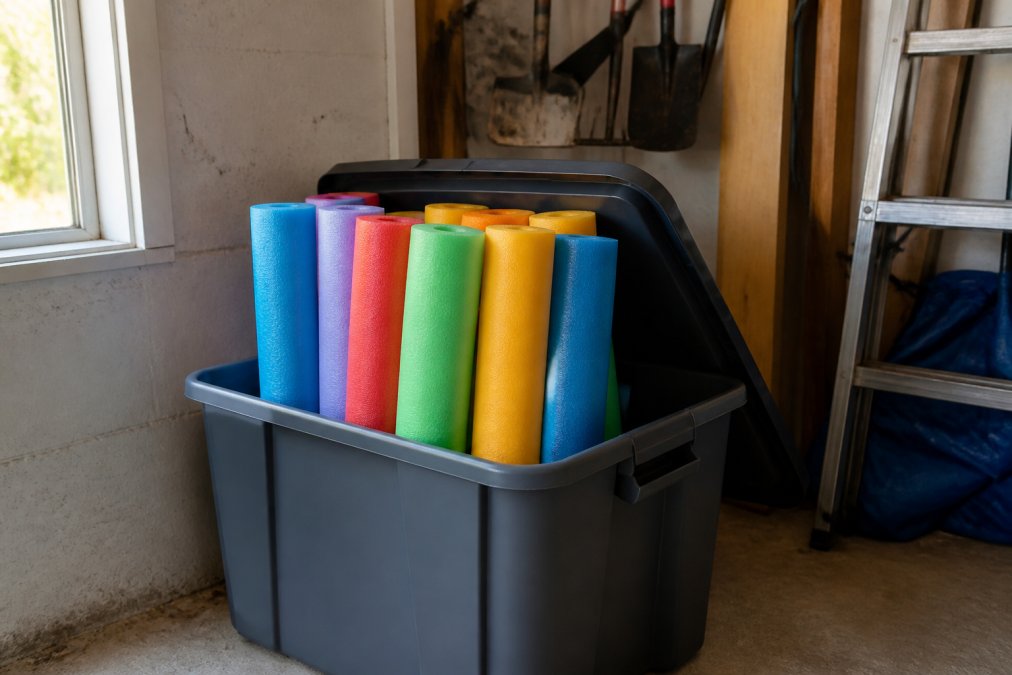
Proper storage is the single most effective preventative measure you can take. When noodles are left floating in the pool or lying on the concrete, they are constantly exposed to the three main enemies: sun, chemicals, and abrasion. The best approach is to remove them from the water after use and store them in a cool, dry place.
A large plastic storage container with a lid is ideal. It protects against UV exposure and keeps the noodles clean. If you are short on space, a mesh laundry bag hung in a shaded shed or garage works well, as it allows air circulation and prevents mildew. For those looking for commercial-grade solutions, guidance on extending the life of polyethylene products suggests keeping materials away from direct heat sources and ozone-generating equipment, which can cause premature cracking.

Protective Coatings and DIY Sleeves
A physical barrier is the most direct defense against the three primary degradation forces: UV radiation, chemical oxidation, and mechanical abrasion. While the concept is simple, the execution matters. Most generic 'water-based acrylic sealants' are not formulated for continuous submersion in chlorinated water and will peel or wash off within a few uses. The professional-grade approach is to use a flexible, non-toxic coating designed for marine or outdoor foam applications.

Chemical Compatibility: The Overlooked Variable
Most pool owners focus on UV damage, but pool chemistry is an equally aggressive enemy. Chlorine and bromine are oxidizers that attack the polymer chains in polyethylene foam, stripping the outer skin and making the surface porous. Once porous, the foam absorbs water, becomes heavy, and sheds particles with every squeeze. A coating that is only UV-resistant does not address this chemical erosion. Look for sealants that explicitly state resistance to pool chemicals or saltwater. Products like Liquid Rubber's waterproof sealant specifications or a marine-grade UV spray with a high solids content create a sacrificial layer that takes the chemical hit instead of the foam. These coatings are flexible, so they move with the noodle without cracking, and they are non-toxic once cured, making them safe for pool use.
Application Technique for Maximum Longevity
A single thin coat is insufficient. The foam surface is porous, and the first coat will soak in, acting as a primer. The correct method is to apply two to three thin, even coats, allowing each to dry completely in a shaded, well-ventilated area. This builds a continuous film that seals the surface. Before applying, clean the noodle with a mild soap solution and let it dry completely; any residual chlorine or salt will compromise the adhesion of the sealant. Reapply the coating at the start of each season, as the sacrificial layer will slowly wear away with use.
DIY Sleeves: Beyond the Pantyhose Hack
While pantyhose is a common tip, it offers minimal protection against UV and chemical exposure; it only handles surface abrasion. A more effective DIY sleeve uses a woven fabric with a tighter weave, such as an old cotton pillowcase or a piece of ripstop nylon. The key is to create a snug fit that does not flap in the water, as flapping creates friction that wears through both the fabric and the foam. For securing noodles to hard surfaces like docks or pool ladders, the most effective method is to use a bungee cord with a protective sleeve. Guidance on selecting UV-resistant cordage for outdoor use recommends polyester over polypropylene for this application, as polyester has superior UV resistance and will not degrade and snap after a single season. The bungee should be looped through the noodle's center hole, not wrapped around the outside, which compresses the foam and creates stress points.
This approach transforms a simple hack into a systematic protection plan, addressing the chemical and physical stressors.
Choosing Jumbo Pool Noodles With Durable Foam
Not all foam is created equal, and the density of the material is the primary indicator of durability. A standard, low-density noodle is cheap for a reason; it degrades quickly. When purchasing replacements, look for high-density polyethylene foam. These noodles feel firmer and heavier, and they resist indentation and tearing much better than their flimsy counterparts. Material density is the difference between a noodle that lasts one season and one that lasts several.
For heavy use in commercial settings like camps or public pools, the investment in durable foam pays off quickly. The American Society for Testing and Materials standards on foam density outlines specific tests that measure a foam's resistance to compression and degradation. When you are shopping, check the product specifications for density ratings or simply squeeze the noodle; a durable one should spring back immediately without creasing.
Common Mistakes That Shorten Noodle Life
Several habits guarantee an early demise for your pool noodles. Leaving them in the skimmer basket or near the filtration system outlet exposes them to constant chemical flow and mechanical stress. Another major error is using them as a permanent bumper for boats or docks without any protective sleeve, which leads to rapid surface abrasion against rough pilings.
Perhaps the most common mistake is neglecting to rinse noodles after use in a saltwater pool or the ocean. Salt crystals are abrasive and hygroscopic, meaning they draw moisture and accelerate chemical erosion. A quick freshwater rinse after every saltwater session adds months to the noodle's life. Finally, avoid bending noodles sharply or sitting on them in a way that creases the foam; these creases become stress points where the material eventually splits and begins to disintegrate.
Final Tips for Long-Lasting Pool Noodles
Extending the life of your pool noodles is not just about saving money; it is about reducing the environmental footprint of your pool. Every time a noodle sheds foam, it releases microplastics into the water. These particles are too small for your pool's filter to catch, and they eventually flow into municipal wastewater systems and, ultimately, natural waterways. The Environmental Protection Agency's information on microplastics identifies microplastics as a growing concern for aquatic ecosystems. By preventing shredding, you are directly reducing the amount of plastic pollution your household generates.
A Maintenance Philosophy That Works
Treat your noodles as equipment, not disposable toys. This means establishing a routine that addresses all three degradation vectors: UV, chemical, and mechanical.
- The 30-Minute Rule: Remove noodles from the water within 30 minutes of the last swimmer exiting. This limits chemical absorption and prevents unnecessary sun exposure.
- The Rinse Station: Keep a spray bottle filled with fresh water near the pool deck. A quick rinse of each noodle before storage removes residual chlorine and salt, which are the primary drivers of chemical erosion.
- The Shade Protocol: Store noodles in a container with a lid, not just in a shaded area. UV rays reflect off surfaces like concrete and water, so a closed container is the only reliable way to guarantee zero UV exposure.
- The Quarterly Inspection: Once a month, run your hand along the entire length of each noodle. Feel for chalky residue, soft spots, or surface cracks. Catching damage early allows you to apply a sealant or retire the noodle before it starts shedding microplastics into the pool.
The Cost of Neglect vs. The Cost of Prevention
A standard pool noodle costs between $5 and $10. A high-density noodle with a protective coating can cost $15 to $25 but will last multiple seasons. The math is simple: prevention is cheaper than replacement. More importantly, a noodle that lasts three years instead of one reduces the plastic waste you send to a landfill by two-thirds.
When Replacement Is the Responsible Choice
When a noodle has reached the end of its life, do not throw it in the trash where it will sit in a landfill for centuries. Check with your local recycling program to see if they accept polyethylene foam. Some municipal facilities have drop-off points for foam packaging, and a few specialty recyclers will accept pool noodles. If recycling is not available, cut the noodle into smaller pieces and dispose of it in a sealed bag to prevent loose foam bits from escaping into the environment. The goal is to keep foam out of the ecosystem, whether it is in your pool or in a landfill.
Frequently Asked Questions
Are there pool noodles that don't disintegrate?
Yes. Standard pool noodles are made from polyethylene foam, which breaks down from UV exposure and chlorine. For longer life, look for jumbo pool noodles or commercial-grade options with a tough outer skin, like Tough Skin Clamp Padding. These have a denser, closed-cell structure that resists water absorption and abrasion. While no foam lasts forever, higher-density options can survive multiple seasons where standard noodles fail within weeks.
Can you coat pool noodles to make them last longer?
Yes, a flexible coating can add a protective barrier. Look for a water-based, flexible sealant designed for foam or use a UV-resistant spray. Avoid rigid paints that crack and flake. A simpler method is a DIY sleeve: slide the noodle into nylon hosiery or wrap it in a protective sleeve. This blocks direct sun exposure and prevents surface abrasion. Reapply coatings each season for the best protection.
What is the best way to store pool noodles to prevent damage?
Store noodles completely dry in a shaded area. Sun exposure and trapped moisture are the main causes of degradation. Use a storage container with a lid to block UV rays and keep out pests. Hang them horizontally on hooks in a garage or shed, or stand them upright in a large bin. Never leave them floating in the pool or lying on concrete, as constant sun and surface abrasion will cause fraying.
How do I stop my pool noodles from flaking?
Flaking happens when the foam surface dries out and breaks down from UV degradation. Start by rinsing the noodle with fresh water and mild soap to remove chlorine and debris. Once dry, apply a flexible foam sealant to protect the surface. For immediate use, wrap the noodle in a protective sleeve or nylon hosiery. Store noodles out of direct sunlight when not in use to slow the process.
Foam degradation is inevitable, but rapid shredding is not. By understanding the causes of UV damage and chemical erosion, you can take simple steps to protect your investment. From smart storage solutions to choosing the right material density, each decision adds to the longevity of your gear. Get started with FoamNoodles and find foam products built to last through many summers of fun.