

Is EPE Foam Right for Your Costume Project?
Editorial TeamQuick Summary
EPE foam is a closed-cell polyethylene foam that is light, tough, and easy to cut, making it a practical choice for costume armor, props, and wearable pieces. Choose thickness by job: 1/8 to 1/4 inch for detail work, 3/8 to 1/2 inch for armor panels, and 3/4 to 1 inch for rigid shields and helmets.
- Use a fresh blade and cut in several light passes for clean edges.
- Test-bend a scrap piece before committing to a finished panel.
- Heat foam gradually and shape it while warm over a curved form.
- Sand edges, wipe away dust, and let the piece dry before priming.
- Use the thinnest foam that still holds its shape to keep costumes light.
Table of Contents
- What EPE Foam Is and Why Costume Makers Use It
- EPE Foam Thickness for Costumes: Matching Thickness to Each Piece
- How to Cut EPE Foam Cleanly
- How to Shape Foam for Cosplay Armor
- How to Smooth Foam Edges Before Painting
- Keeping EPE Costume Pieces Light and Comfortable
- Ordering EPE Foam for Your Next Costume Build
- Frequently Asked Questions
Is EPE Foam Right for Your Costume Project?
Last Updated: November 22, 2026
What EPE Foam Is and Why Costume Makers Use It
Choosing EPE foam for costume making starts with knowing what the material is. EPE is a closed-cell polyethylene foam. It is light, tough, and easy to cut, which makes it a practical pick for armor, props, and wearable pieces.
Costume makers like it for a few simple reasons:
- It stays light. Big pieces will not weigh down the wearer.
- It resists tearing. The closed-cell structure is strong and tear resistant.
- It cuts cleanly. A sharp utility knife makes straight, tidy edges.
EPE works well for a range of projects. You can use it for shoulder pads, chest plates, helmets, and shields. It also suits foam swords and other props that need to survive a convention weekend.
EPE Foam Thickness for Costumes: Matching Thickness to Each Piece
Thickness is the choice that matters most, and it is where most first-time builders guess wrong. EPE foam for costumes is commonly sold in sheets from about 1/8 inch to 1 inch thick, and each range behaves differently under bending, gluing, and body weight. Match the thickness to the job, then test a scrap before you commit.
- 1/8 inch to 1/4 inch bends easily by hand and suits detail pieces, trim, layered surfaces, and flexible overlays. It will not hold a rigid shape on its own.
- 3/8 inch to 1/2 inch is the workhorse range for most armor panels, chest plates, and costume accents. It holds a curve when shaped and still flexes enough to wear.
- 3/4 inch to 1 inch fits structural parts that must stay rigid, such as shields, helmet shells, and large shoulder pieces. It is heavier and harder to bend without heat.
Test with a scrap piece before you commit. Bend it and press it against your body to see how it feels. A panel that flexes too much may need a second layer; a panel that digs in may need a thinner sheet or a rounded edge.
Watch out: Thick EPE resists bending and can crack along a fold line if you force it cold. Score the fold or apply gentle heat before bending, and never assume a thick sheet will behave like a thin one.
The right thickness depends on the job the piece has to do, so match the sheet to the part:
| Thickness | Best for | Key behaviour |
|---|---|---|
| 1/8 inch to 1/4 inch | Detail pieces, trim, layered surfaces | Bends easily by hand; will not hold a rigid shape alone |
| 3/8 inch to 1/2 inch | Armor panels, chest plates, costume accents | Holds a curve when shaped and still flexes enough to wear |
| 3/4 inch to 1 inch | Shields, helmet shells, large shoulder pieces | Stays rigid; heavier and harder to bend without heat |
How to Cut EPE Foam Cleanly
Clean cuts make a costume look professional. Use a fresh blade, because a dull knife tears the foam instead of slicing it.
Work this way for the best results:
- Mark your lines with a pencil or marker.
- Use a straight edge and cut in several light passes.
- Keep the blade vertical so the edge stays square.
- Clean up rough spots with a fine sanding block.
Watch out: Pushing too hard can crack the foam along the cut line. Slow, steady passes give you a cleaner edge.
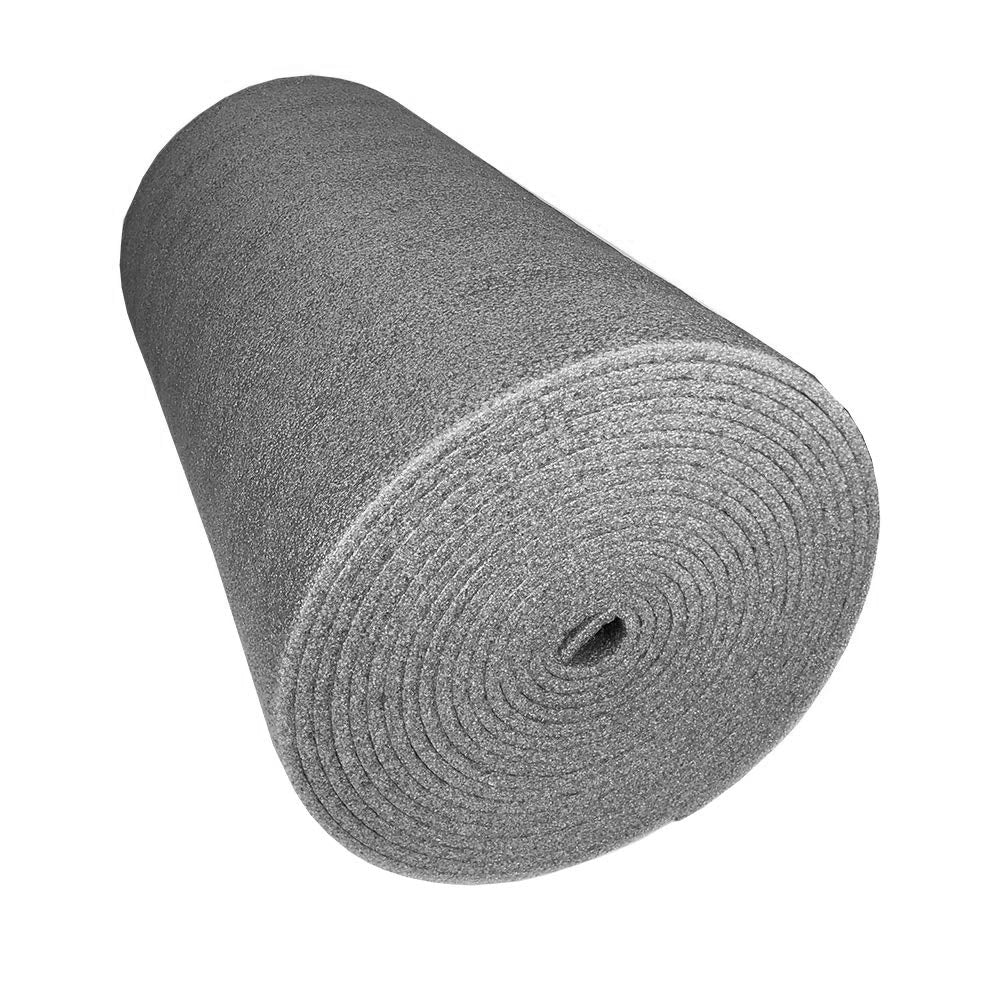
Our Polyethylene Flat Foam Roll is a good choice when you need large sheets. You can cut it with a razor knife to fit your pattern.
How to Shape Foam for Cosplay Armor
Shaping turns flat sheets into curves that fit the body. Check the product documentation for your sheet before shaping it.
Work through a safe sequence:
- Prepare the space. Set up on a stable, nonflammable surface with nothing flammable nearby, and work in a ventilated area. Keep a fire extinguisher within reach.
- Test on a scrap. Heat a small offcut first to see how your sheet responds before you touch a finished panel.
- Heat gradually. Hold the heat source several inches from the foam and keep it moving. Tool settings, airflow, distance, and dwell time all affect the result, so start low and increase slowly rather than committing to one setting.
- Shape while warm. Bend the piece slowly over a curved form, such as a bowl, a tube, or a rounded object, and hold it until it keeps the new shape.
- Cool and inspect. Let the piece cool fully, then check the fit. Work in small steps and reheat as needed rather than forcing a cold bend.
Watch out: If the foam smokes, scorches, or smells acrid, stop, turn off the tool, and leave the area until it clears. Overheating can melt the surface, warp the panel, and weaken glued seams. Ventilation and gradual testing are the controls that prevent this.
Start with a plan. Sketch the shape on paper first, then transfer it to the foam. Shaping in stages prevents creases and uneven curves. Many makers also learn more about shaping foam for armor in longer walkthroughs before starting a big build.
How to Smooth Foam Edges Before Painting
Follow these steps:
- Sand the edges with fine-grit sandpaper.
- Wipe away the dust with a damp cloth.
- Let the piece dry fully before you prime it.
For a full walkthrough, see how to paint craft foam for costumes. If you want a deeper look at sanding, our guide on smoothing EVA foam edges covers the process step by step.
Keeping EPE Costume Pieces Light and Comfortable
A costume that looks great but weighs too much will wear you out fast. Keep pieces light by using the thinnest foam that still holds its shape.
Comfort matters too:
- Round off sharp corners so they do not dig into skin.
- Add a soft liner on parts that touch the body.
- Test the fit by wearing the piece for a short time before the event.
Balance weight across the body. A heavy chest plate paired with light arm pieces will feel awkward over a long day.
Ordering EPE Foam for Your Next Costume Build
Plan your quantities before you buy. Sketch each piece, measure it, and add a little extra for mistakes. Running out mid-build wastes time.
For larger builds, the Polyethylene Flat Foam Roll provides a large amount of foam sheet at once. Smaller projects may only need a few sheets or pre-cut pieces from our craft range, such as the Sticks Craft Foam 1.5" x 35" in Gray for detail work.
When you are ready, pick your thickness, sketch your pattern, and start with one test piece. A small trial saves you from wasting a full sheet.
Frequently Asked Questions
What thickness of EPE foam works best for costume making?
Most costume pieces use foam between about 1/4 inch and 1/2 inch thick. Thinner sheets bend easily and suit flexible parts such as collars or trim. Thicker sheets hold a shape better and suit armor plates and helmet panels, though they are heavier and harder to cut by hand. Many builders layer thinner pieces to reach a thickness they need, which keeps weight down. Start with the thinnest material that holds its shape under the stress the piece will see, then test a sample before cutting the full part.
Can EPE foam be cut cleanly by hand?
Yes, a sharp utility knife or a fresh blade cuts EPE foam cleanly when you use light, steady passes instead of forcing the cut in one stroke. Mark your line, score the foam several times, then cut through. Change blades often, since a dull edge crushes the foam and leaves ragged edges. For long straight cuts, a straightedge keeps the line true. Work on a cutting mat so the blade does not drag across the table.
How do you join EPE foam pieces for a costume?
Glue is the most common method. Use an adhesive recommended for foam and test it on a scrap first, because some glues dissolve or deform closed-cell foam. Apply a thin layer to both surfaces, let it tack briefly, then press the pieces together and hold until set. For stronger joints on armor, glue a backing strip across the seam. Let every joint cure fully before handling or painting.
How do you keep EPE foam costume pieces lightweight and comfortable?
Choose the thinnest EPE foam that still holds the shape you need, and hollow out large areas where the design allows. Keep layers to what the design requires, since each added sheet adds weight. Pad the inside edges where the piece touches skin or fabric, and check that straps distribute weight across the shoulders or hips rather than one point. Test-wear the piece for several minutes before the event so you can adjust fit and balance.
